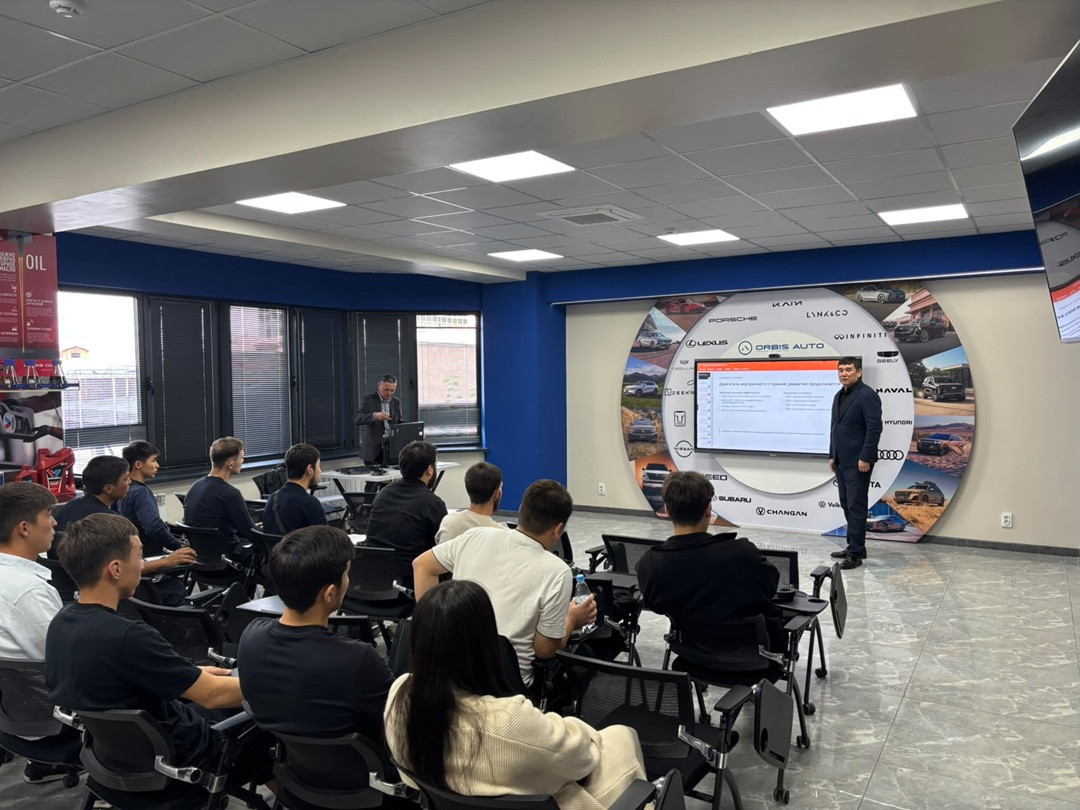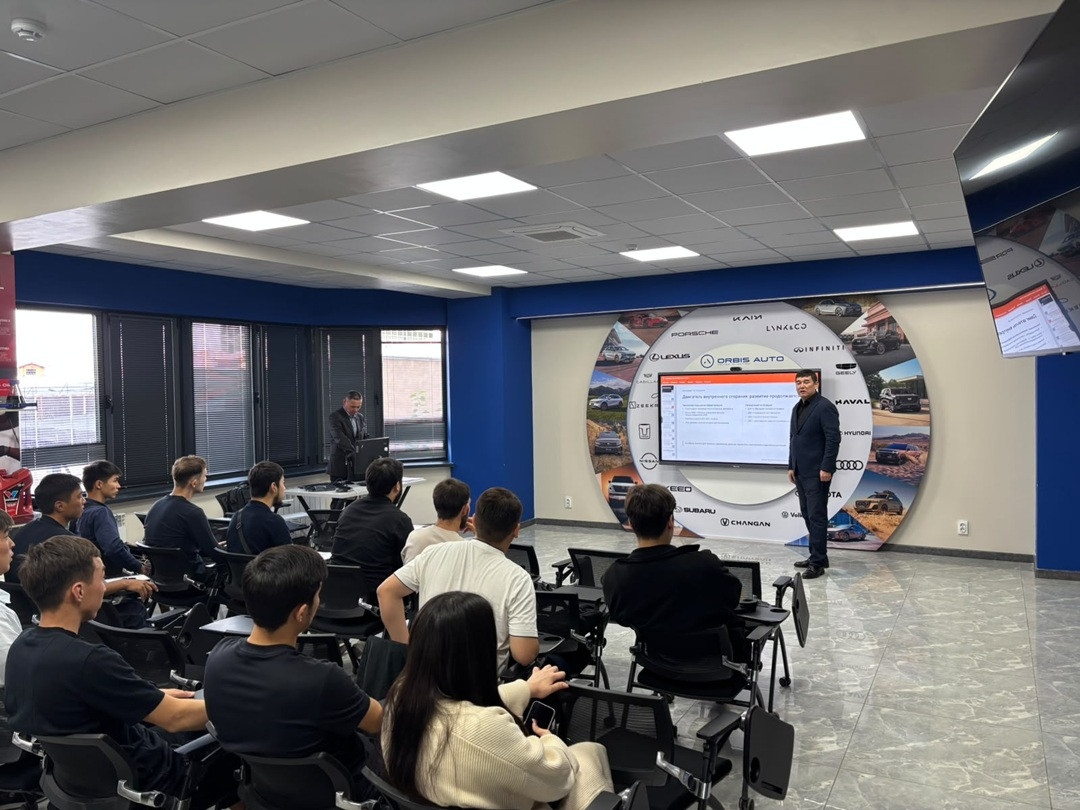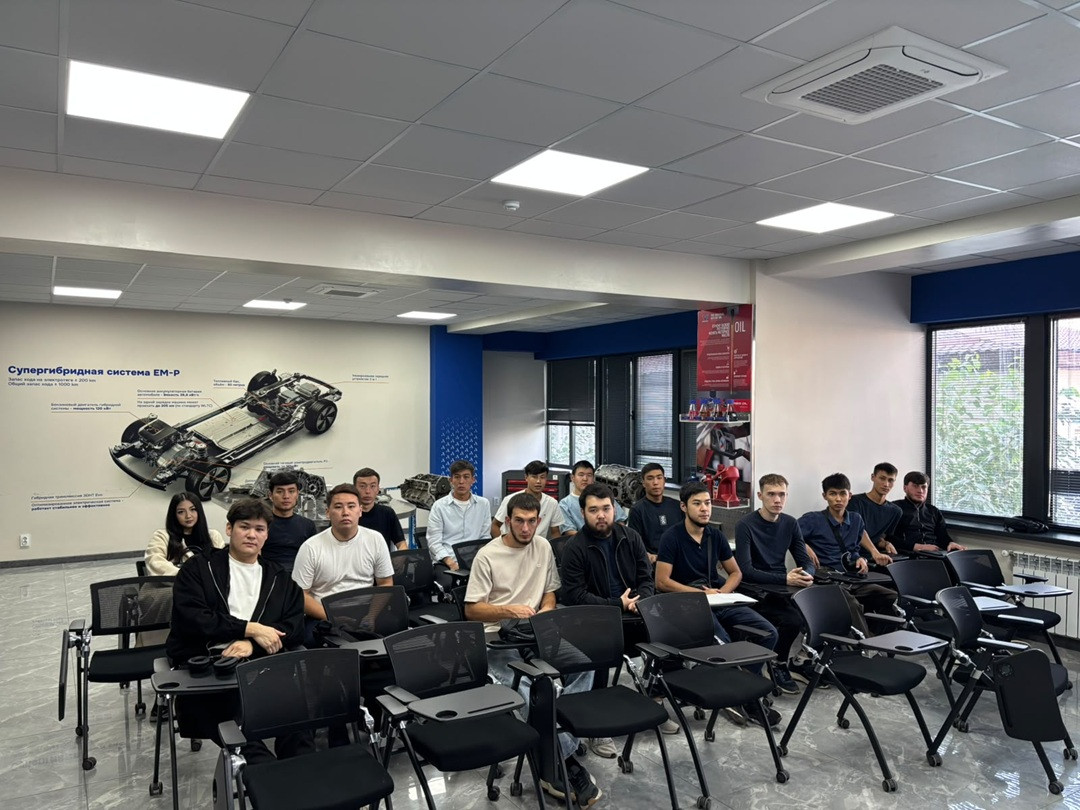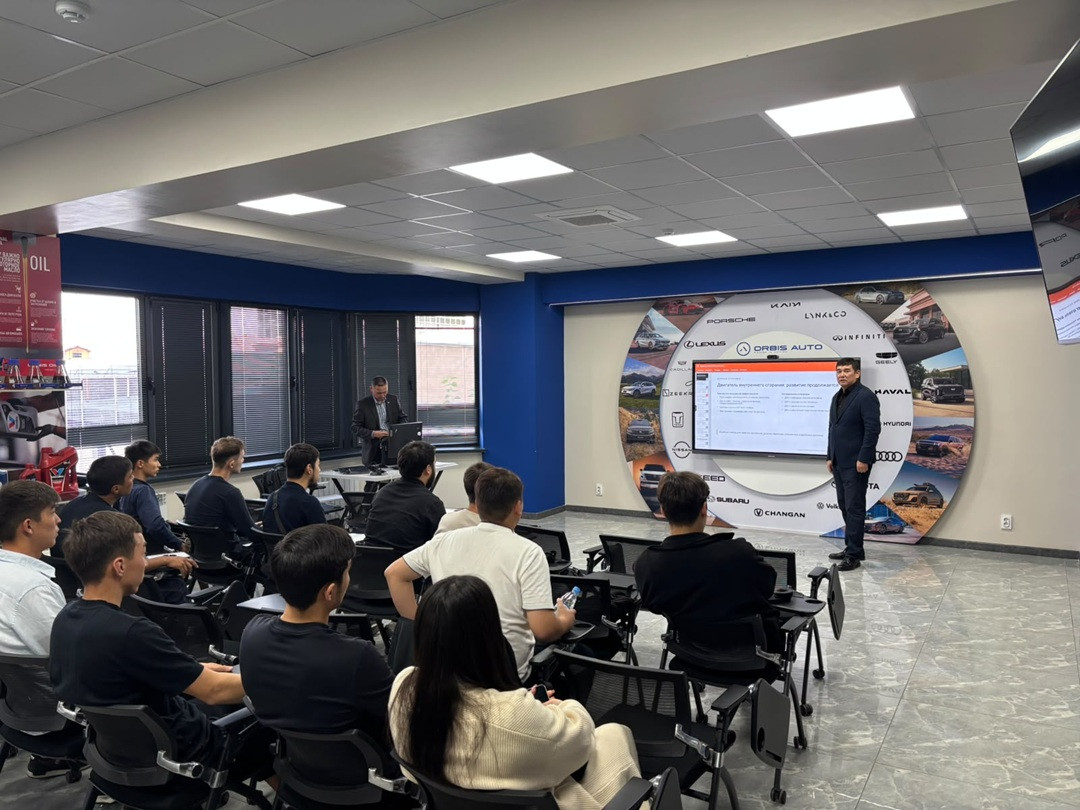
On September 28, 2026, the Head of the Department of Automotive Engineering and Safety organized a guest lecture entitled “The Future of the Automotive Industry and Modern Development Trends.”
The invited speaker was Mirlan Turarbekuly Satanov, Deputy Director of BEST FITS LLP.
Objective of the lecture: To introduce participants to the key trends in the development of the automotive industry, innovative technologies, and future prospects for transportation.
The automotive industry is undergoing one of the most significant transformations in its history. In the past, the main priorities were increasing engine power, improving vehicle speed, and enhancing comfort. Today, the industry’s development priorities have expanded considerably.
A modern vehicle is no longer merely a means of transportation. It is becoming a complex intelligent system that integrates software, sensors, electronic control units, telecommunications technologies, and energy-efficient powertrains.
Therefore, the environmental impact of a vehicle must be assessed comprehensively, from raw material extraction and manufacturing to operation and end-of-life disposal.
The development of environmentally friendly transportation solutions is an important priority. This includes exploring the potential of electric vehicles and alternative technologies while taking local infrastructure into account.
For Kazakhstan, it is particularly important to consider geographical distances, temperature fluctuations, vehicle ownership costs, and the availability of maintenance services. These factors directly influence technology selection and the pace of implementation.
Future professionals need to combine fundamental technical knowledge with practical skills in diagnostic equipment, software, and digital tools.
An interdisciplinary approach integrating mechanical engineering, electronics, computer science, and environmental technologies will become increasingly important.
For Kazakhstan, these changes create new opportunities to modernize manufacturing, develop engineering competencies, and introduce innovative solutions in the transportation sector.
Author: Mekebaeva A. K.