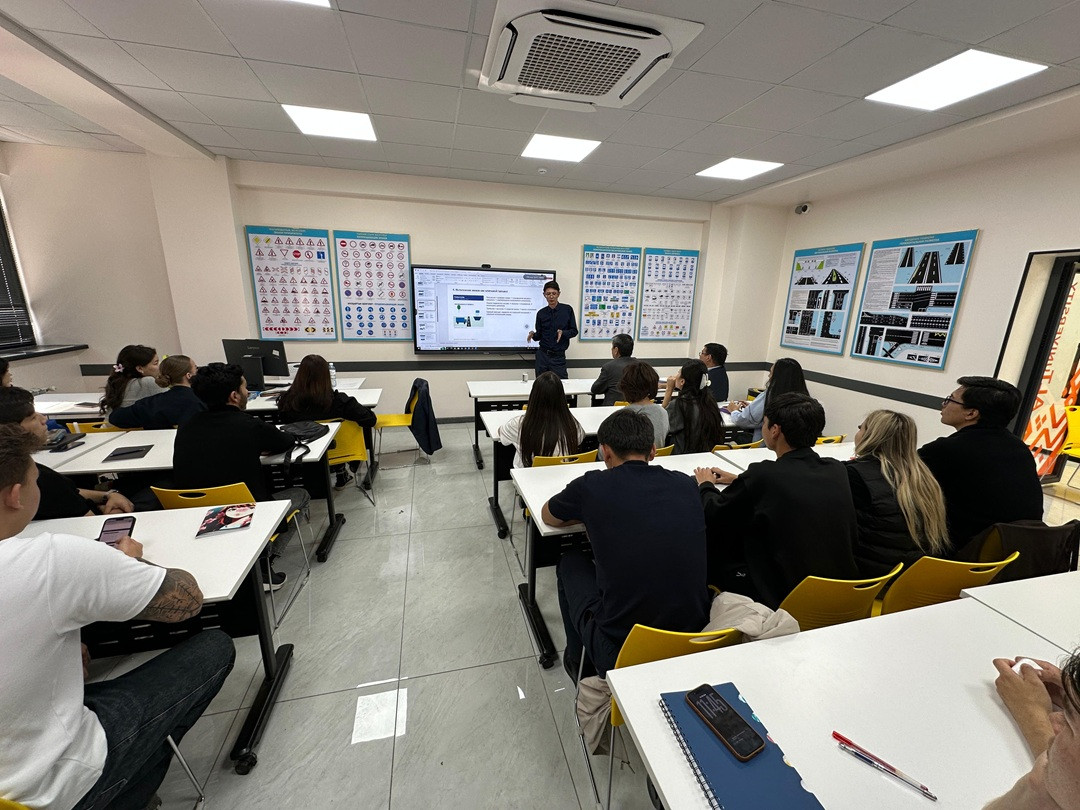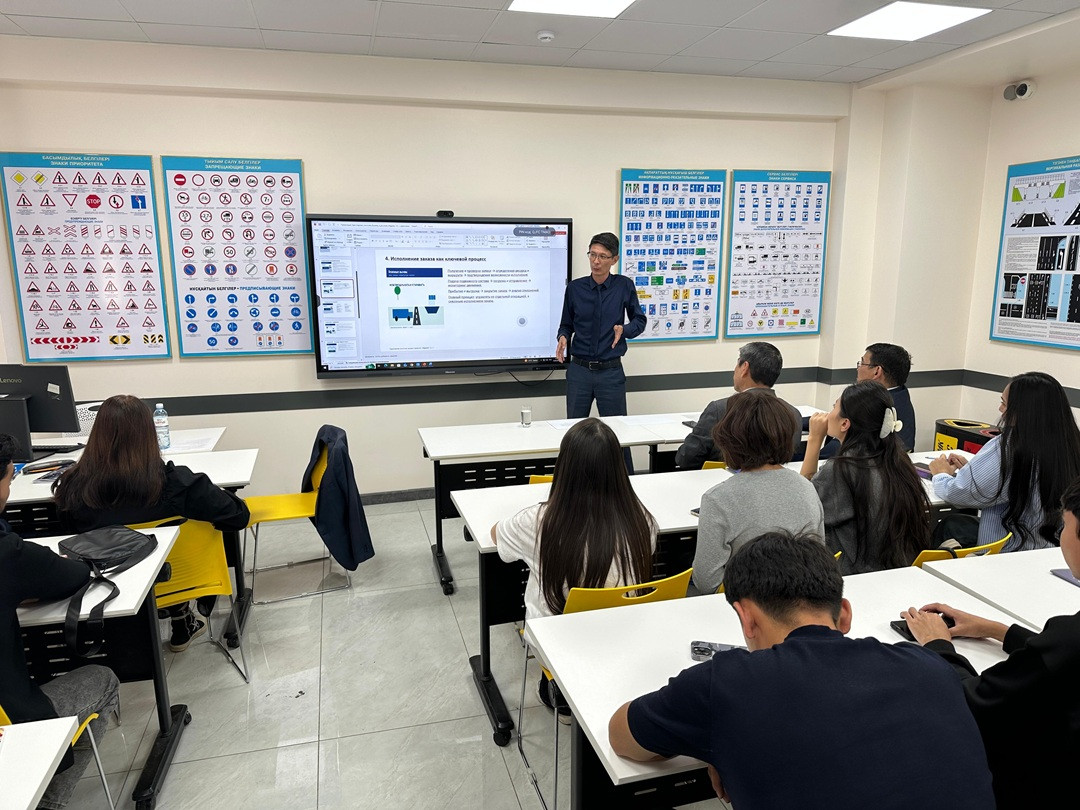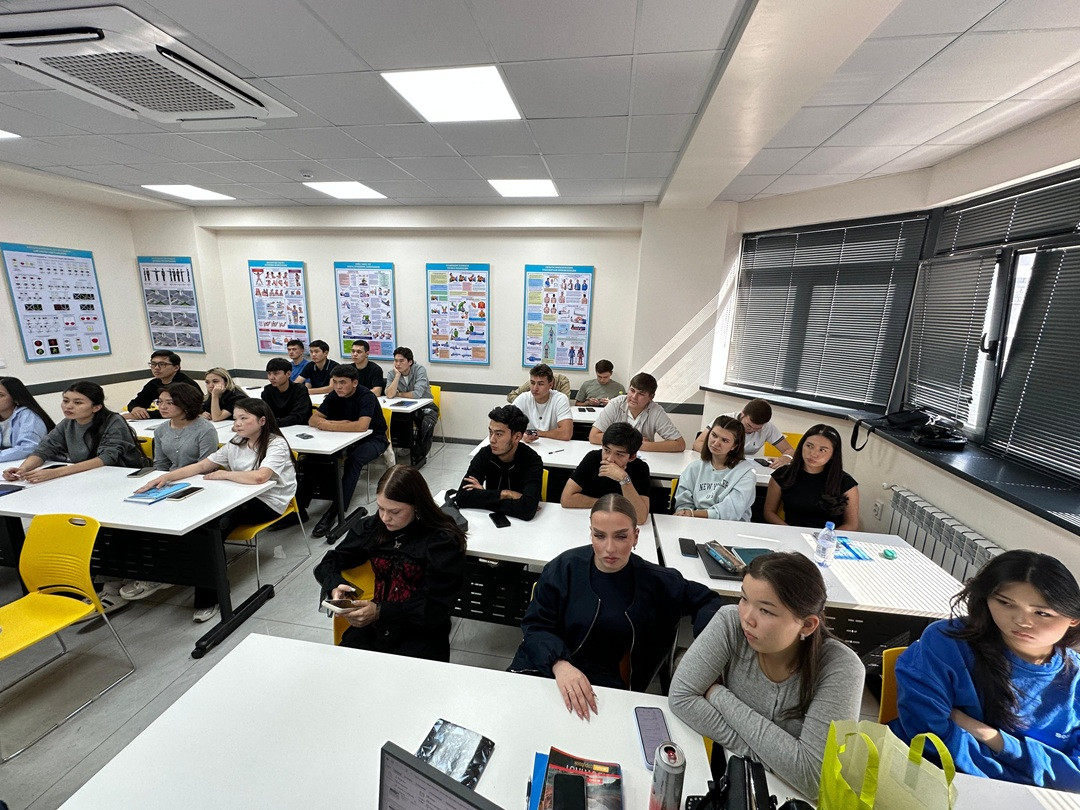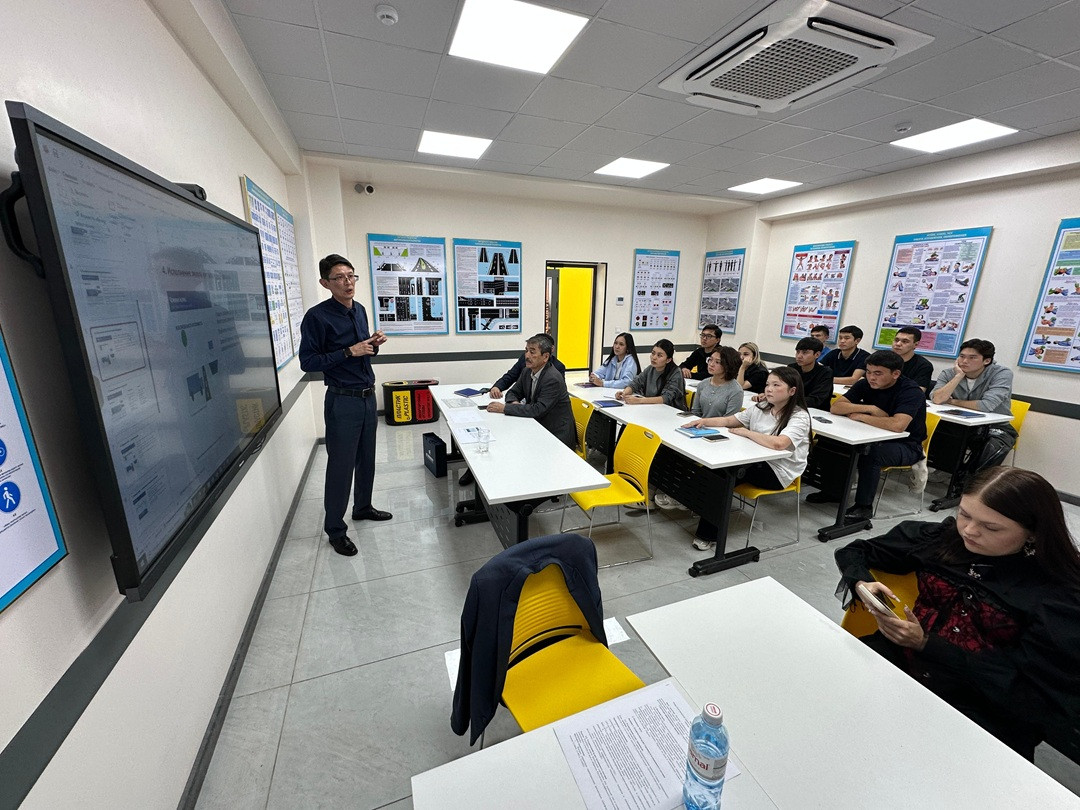
ALT University hosted a guest lecture entitled “Transport Logistics: Challenges and Solutions” for fourth-year students of the Transport Logistics educational programme (groups TL-23-3 and TL-23-4), as part of the Container Transportation and Technologies course.
The invited speaker was Gabit Almasbekovich Abdreyev, Chief Specialist at the KTZE Southern Branch of JSC KTZ Express and an alumnus of ALT University.
The event provided a platform for professional dialogue between an industry representative and future logistics specialists, allowing students to explore real-world operational challenges, current industry issues, and practical approaches to managing transport processes.
From Individual Shipments to End-to-End Supply Chain Management
During the lecture, Gabit Abdreyev provided a detailed explanation of end-to-end supply chain management, in which cargo transportation is viewed not as an isolated operation but as an integral part of a continuous logistics process.
The expert outlined the complete transportation cycle, from receiving a customer request, allocating resources, and planning a route to monitoring cargo movement, tracking performance, and completing the order.
Particular attention was given to the major challenges facing the transport and logistics industry:
-
fluctuations in freight flows and difficulties in forecasting transportation demand;
-
shortages of rolling stock and the need for its efficient utilization;
-
empty movements of wagons and containers;
-
infrastructure constraints across the transport network;
-
the need for better coordination among supply chain participants.
Discussing these issues helped students gain a deeper understanding of the relationship between transportation planning, resource management, and the quality of logistics services.
Digitalization, Optimization, and Performance Management
One of the central topics of the lecture was the discussion of tools that enable transport and logistics companies to respond effectively to modern industry challenges.
The expert highlighted digitalization of logistics processes, route optimization, and systematic monitoring of key performance indicators (KPIs) as essential solutions.
Special attention was paid to the practical importance of the following indicators:
-
OTIF (On Time In Full) — measuring whether orders are delivered on time and in full;
-
wagon turnaround time — an indicator of the efficiency of railway rolling stock utilization;
-
load factor — measuring how effectively available transport capacity is used.
These tools help companies evaluate transportation performance, identify operational bottlenecks, reduce unnecessary costs, and improve customer service quality.
Open Dialogue: Questions from Future Logistics Professionals
An active discussion between the invited expert and final-year students added significant practical value to the event.
Anna Rozhkova, Alisher Iminov, Sofia Morozova, and Azamat Amangeldin raised important questions concerning the operation of modern transport systems.
The discussion focused on the issue of so-called “abandoned trains” — trains left standing or delayed within the railway network — as well as the efficient repositioning of empty containers and ways to reduce the processing time of container trains at border stations.
These issues are directly relevant to improving transport infrastructure capacity, accelerating freight movements, and strengthening coordination among participants in international logistics chains.
The students’ active engagement demonstrated their interest in industry challenges and their motivation to understand the practical mechanisms of transport and logistics operations.
Practical Experience as an Essential Component of Professional Training
The participation of an ALT University alumnus, who now applies his knowledge in a professional role at one of Kazakhstan’s leading transport and logistics companies, added particular significance to the guest lecture.
Meetings with industry professionals allow students to connect theoretical knowledge with real-world practice, better understand employers’ expectations, and gain a clearer picture of the professional responsibilities they will encounter after graduation.
For students of the Transport Logistics educational programme, such events are especially valuable in developing analytical thinking, problem-solving skills, and an understanding of current trends in container and multimodal transportation.
Cooperation between the university, employers, and alumni contributes to improving the quality of practice-oriented education and preparing competitive specialists for Kazakhstan’s transport and logistics sector.
Contribution to the United Nations Sustainable Development Goals
The guest lecture supports sustainable development priorities related to improving education quality, developing professional capacity, modernizing transport infrastructure, and strengthening industry partnerships.
- SDG 4 — Quality Education. Enhancing practice-oriented learning, developing students’ professional competencies, and preparing qualified specialists for the transport and logistics industry.
- SDG 8 — Decent Work and Economic Growth. Improving the efficiency of transport and logistics operations, optimizing rolling stock utilization, reducing operating costs, and strengthening the industry’s human capital.
- SDG 9 — Industry, Innovation and Infrastructure. Promoting digitalization, introducing modern supply chain management technologies, optimizing transportation routes, and improving the efficiency of transport infrastructure.
- SDG 17 — Partnerships for the Goals. Strengthening cooperation between ALT University, transport and logistics companies, employers, and university alumni, facilitating the exchange of practical experience, and developing partnerships between education and industry.
The guest lecture served as an example of effective cooperation between academic education and the transport and logistics industry, contributing to the development of future specialists’ professional competencies and strengthening the university’s connections with the industrial sector.
Author: Alik Asel