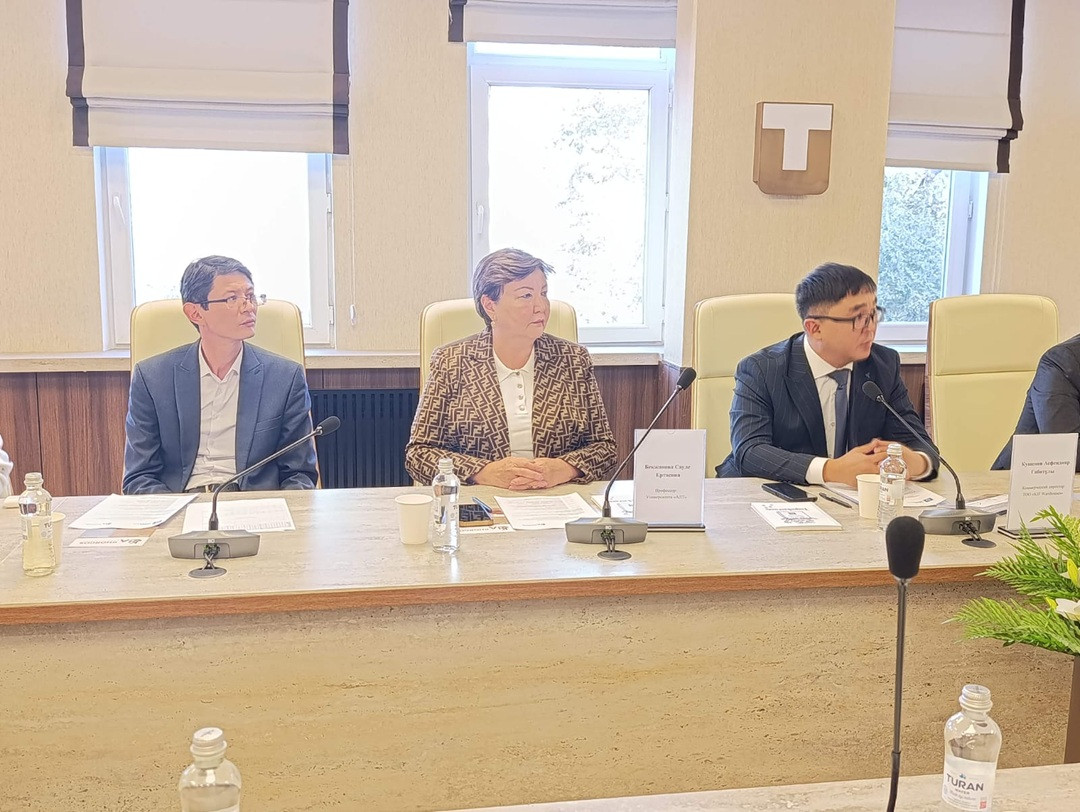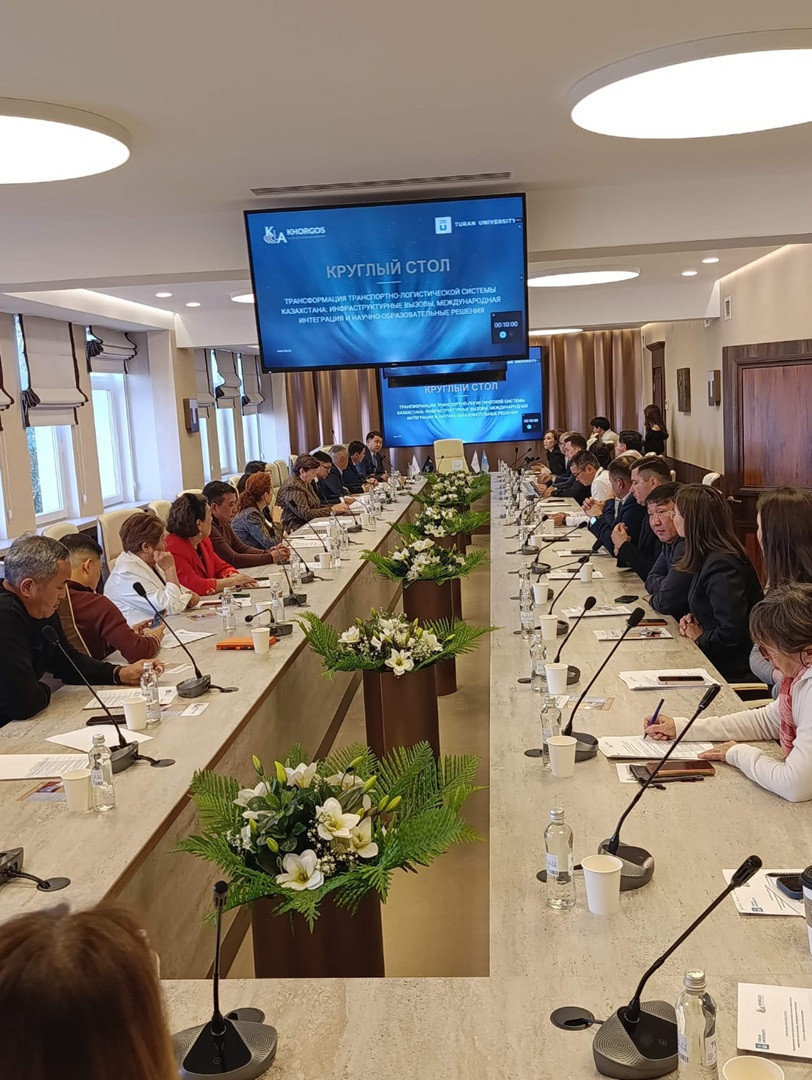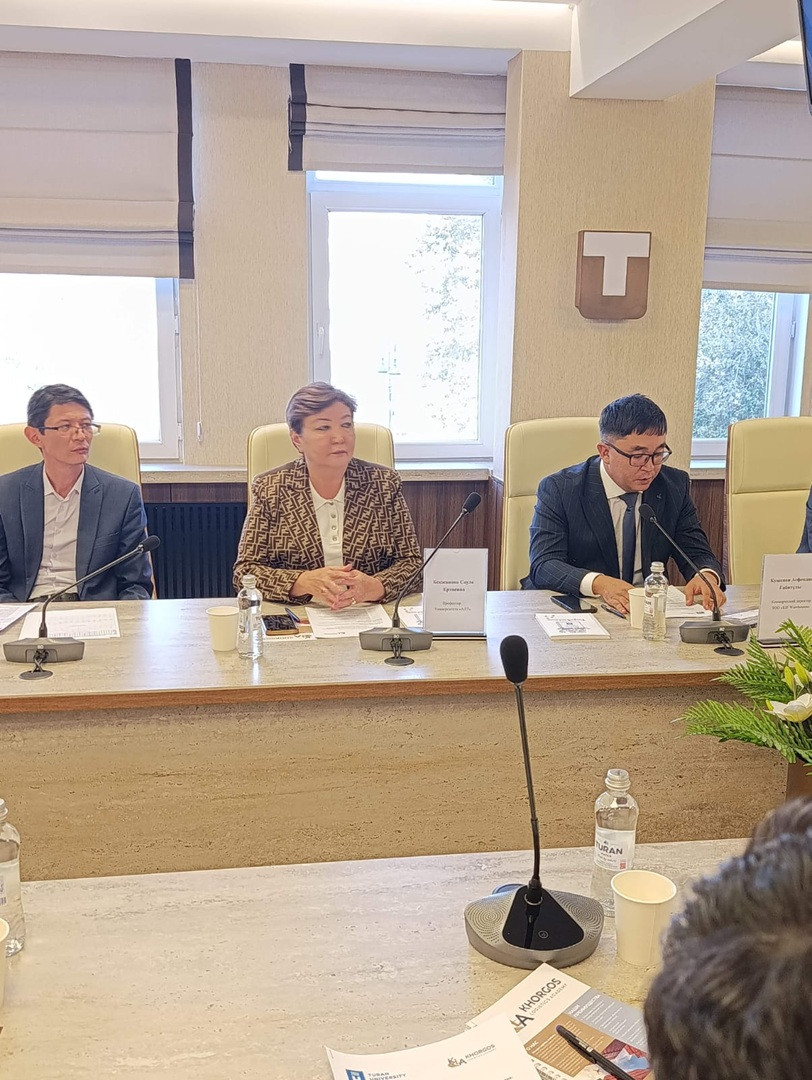
On October 28, 2026, a roundtable discussion entitled “Transformation of Kazakhstan’s Transport and Logistics System: Infrastructure Challenges, International Integration, and Scientific and Educational Solutions” was held at Turan University in Almaty. The event was jointly organized by Turan University and Khorgos Logistics Academy (KLA).
Saule Yertayevna Bekzhanova, Doctor of Technical Sciences and Professor at the Department of Logistics and Business at ALT University, participated in the event as an invited speaker.
The roundtable brought together representatives of transport and logistics companies, industry associations, experts, and members of the academic community to discuss current challenges and future opportunities for the development of Kazakhstan’s transport and logistics system.
From Infrastructure Challenges to Modern Educational Solutions
The discussions covered the development of container transportation, international transport corridors, logistics terminals and dry ports, warehouse infrastructure, and the transformation of freight forwarding services.
Particular attention was paid to cooperation between businesses and universities, improving professional training, and introducing educational approaches that meet the evolving requirements of the transport and logistics industry.
Training Future Professionals: From Theory to Real-World Projects
Professor Saule Bekzhanova delivered a presentation entitled “Transformation of Professional Training for the Transport Industry: From Theory to Real-World Projects.”
The presentation addressed one of the key priorities of modern transport education: bringing academic training closer to the practical challenges and operational needs of the industry.
For future transport and logistics professionals, acquiring theoretical knowledge alone is no longer sufficient. Developing engineering and analytical thinking, solving real-world industrial problems, working with modern technologies, and adapting to changes in the professional environment are equally important.
Practice-oriented education and cooperation with employers are becoming essential for preparing competitive professionals who can contribute to the development of Kazakhstan’s transport infrastructure and logistics processes.
Why Is This Cooperation Important?
The participation of university representatives in professional industry discussions encourages the exchange of knowledge and experience between academia, education, and business.
It also helps educational institutions consider employers’ current needs when improving academic programs and identifying promising areas for joint projects.
For ALT University, participation in such events is particularly significant given its specialized academic profile and its role in preparing qualified professionals for Kazakhstan’s transport and logistics sector.
These expert platforms create opportunities to strengthen academic and industry partnerships, exchange scientific and practical knowledge, and discuss solutions aimed at improving the quality of professional education.
The participation of an ALT University professor in the roundtable highlights the important role of the academic community in shaping discussions about the future of Kazakhstan’s transport and logistics industry.
Contribution to the United Nations Sustainable Development Goals
- SDG 4 — Quality Education. Improving professional training for transport industry specialists, promoting practice-oriented education, and aligning academic programs with the changing requirements of the labor market.
- SDG 8 — Decent Work and Economic Growth. Developing professional competencies and human capital to enhance workforce competitiveness and support the sustainable growth of the transport and logistics sector.
- SDG 9 — Industry, Innovation and Infrastructure. Discussing opportunities to modernize transport and logistics infrastructure, introduce innovative solutions, and strengthen Kazakhstan’s industrial and logistics capabilities.
- SDG 17 — Partnerships for the Goals. Strengthening cooperation among universities, businesses, and the expert community, encouraging knowledge exchange, and expanding opportunities for joint educational and applied projects.
Author: Alik Asel