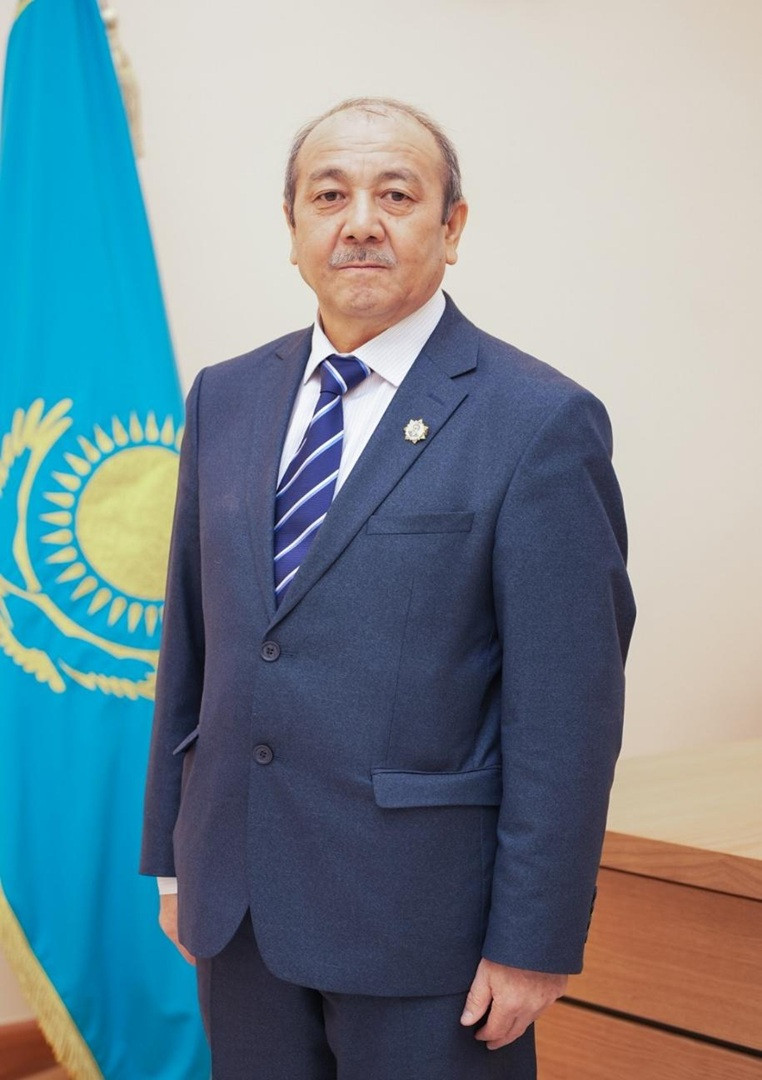
On the occasion of Academician Bagdat Teltaev’s 60th anniversary, the Kazakhstanskaya Pravda newspaper published a detailed profile on his scientific and professional journey. A graduate of the Road Construction Faculty of the Almaty Automobile and Road Institute (now M. Tynyshpayev ALT University), today he leads the Institute of Transportation Sciences and Technologies. Below is the article presented by the publication.
Located in the very heart of Eurasia, Kazakhstan possesses immense transit potential. Under severe continental climatic conditions with extreme temperature fluctuations, building durable transport infrastructure is not merely an economic matter, but a question of strategic state security. For some people, a road is just a route from one point to another. But there are those who dedicate their entire lives to its fundamental study.
For Bagdat Teltaev — Academician of the National Academy of Sciences under the President of the Republic of Kazakhstan, Doctor of Technical Sciences, and Professor — roads have become his lifelong passion: a subject of deep scientific research, professional responsibility, and selfless service to his country.
He was born in the small village of Zhaugash-batyr in the Merke district of the Zhambyl region on March 23, 1966. The foundation of his strong work ethic and pursuit of knowledge was laid in rural schools: from 1973 to 1976, he attended the Kenes school of the “Kazakhstan” collective farm, and in 1983, he graduated with honors from the A. Imanov Secondary School in the “Alga” state farm of the Shu district. Having completed his military service in an automotive company of the Group of Soviet Forces in Germany, the young man firmly decided on his future career.
Enrolling in the Road Construction Faculty of the Almaty Automobile and Road Institute (now M. Tynyshpayev ALT University), Bagdat Burkhanbayevich graduated with honors in 1991 with a degree in Highway Engineering. His academic advancement began right here: progressing from a trainee lecturer and assistant to department chair and full professor.
Early in his career, Bagdat Teltaev chose applied science — research whose results can not only be debated at scientific symposia, but literally felt under vehicle wheels. After completing his postgraduate (1994) and doctoral studies (1998) at the Institute of Mechanics and Mechanical Engineering of the NAS RK, he immersed himself in the complex physicochemical and mechanical processes occurring within road materials.
Why does pavement crack in extreme frost and form ruts in the summer? How do bitumen properties, temperature gradients, and repeated dynamic loads from heavy vehicles impact asphalt concrete? Answering these questions required a comprehensive, interdisciplinary approach. The Academician’s scientific scope expanded to include applied rheology, as well as the thermodynamics of heat and moisture transfer processes within pavement structures and subgrades.
These years of extensive research culminated in three officially registered scientific discoveries supported by formal diplomas. They reveal the self-organization mechanisms of asphalt concrete pavements during low-temperature cracking, phased fatigue degradation of viscoelastic materials, and the formation of nanostructured bitumen. The international significance of these breakthroughs is reflected in the integration of terms such as the “Teltaev Principle,” the “Radovsky–Teltaev Model,” and the “Iskakbayev–Teltaev Integral” into specialized scientific literature.
Co-authored works hold a prominent place in his scientific legacy. In 2018, the world-renowned scientific publisher Springer released a monograph co-authored by B. Teltaev and Professor B. S. Radovsky. In total, the scientist has authored nearly 900 scientific publications, eight monographs, over 40 inventions, 10 textbooks, and five terminological dictionaries.
Bagdat Teltaev’s scientific talents have always been complemented by exceptional organizational skills and strategic statecraft. His career path could have unfolded differently: he received multiple offers to move and work in the USA, Canada, Australia, China, and Russia. A pivotal moment occurred in 2005, when he chose between a prestigious European research fellowship and taking the helm of the Kazakh Road Research Institute (KazdorNW). He chose Kazakhstan.
From 2006 to 2022, under his leadership, KazdorNW transformed into a world-class research center equipped with advanced mobile laboratories from Europe and specialized software suites from the USA. The institute served as the primary R&D driver for the country’s mega-infrastructure initiatives: the construction of the first high-speed highway in the CIS (Astana–Burabay, 224 km), the reconstruction of the Western Europe–Western China transcontinental corridor (2,787 km), and the commissioning of the CASPI BITUM plant in Aktau. During this period, over 70 innovative road materials were deployed across regions, and nearly 200 experimental test sections were built.
Recognizing the need for systemic reforms at the state level, the Academician actively engaged in reshaping the industry. In 2023, on his initiative, the “Transport Science” section was established within the National Academy of Sciences under the President of the Republic of Kazakhstan. Following an in-depth analysis of the country’s transport and logistics sector, Bagdat Burkhanbayevich drafted and submitted a comprehensive analytical report to the Presidential Administration, laying out the foundation for a structural overhaul in transport science management.
His vision came to fruition with the establishment of the Institute of Transportation Sciences and Technologies, created under the auspices of the NAS under the President of RK in partnership with ALT University. In January 2026, Academician Teltaev assumed leadership of the institute, defining new development vectors for the industry. As Vice-Chairman of the Department of Natural and Technical Sciences at the NAS RK, he actively participates in scientific advisory boards and contributes significantly to the expertise and evaluation of regulatory frameworks shaping science policy in Kazakhstan.
Under his guidance, critical regulatory frameworks were established, including 11 Interstate Standards for the Customs Union and over 60 industry regulations. A major technological milestone was the creation of KazPave, a domestic pavement design system tailored specifically to Kazakhstan’s unique climatic zones.
The achievements of the Academician and founder of the national road research school have been recognized at the highest state level. In 2024, Bagdat Teltaev was received by President Kassym-Jomart Tokayev. During a detailed discussion on transport infrastructure challenges, the Head of State issued specific directives to the Government and the relevant Ministry based on the scientist’s proposals. The President personally expressed gratitude to the Academician for his contributions and presented him with an engraved wristwatch, emphasizing the critical importance of implementing cutting-edge scientific developments for national security.
Yet, perhaps the greatest achievement of any scientist is their academic lineage. Building upon the legacy of his mentors — Academicians Zh. S. Yerzhanov and Sh. M. Aitaliyev, as well as Professors B. S. Murtazin, A. I. Iskakbayev, B. S. Radovsky, and A. K. Kusainov — Bagdat Teltaev has mentored a new generation of researchers. His academic mentees include 5 Doctors of Science, 27 Candidates of Science, and 7 PhDs. In 2006, as the founder of the nation’s road research school, his name was officially inducted into the “Kazakhstan” National Encyclopedia.
Reaching his 60th anniversary, Academician Teltaev brings a legacy that extends far beyond publication metrics. It is reflected in thousands of kilometers of durable highways connecting regions and countries, a robust regulatory-technical foundation for an entire industry, and a new generation of scientists carrying forward national research. A road always signifies forward movement — and for Bagdat Burkhanbayevich, this lifelong journey continues, opening up new horizons.