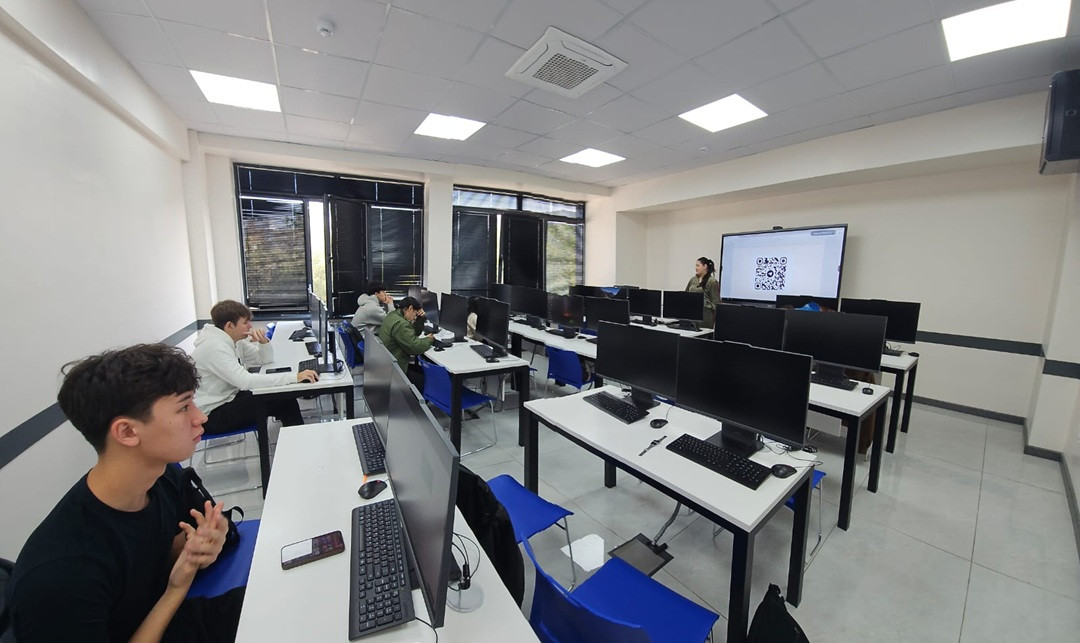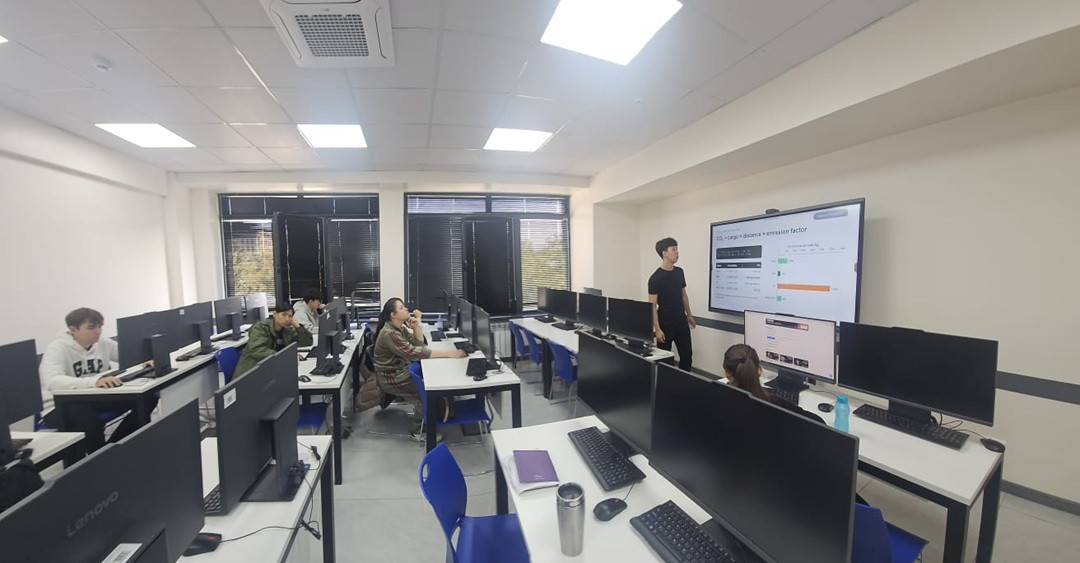
On October 7, 2026, at ALT University named after Mukhametzhan Tynyshpayev, students of group ML-25-1 from the Department of Logistics and Business independently conducted a practical class in “Information Technologies in Logistics” as part of Student Self-Government Day.
The highlight of the class was the presentation of students’ own digital projects designed to address practical challenges in the transport and logistics industry. On this day, students acted not only as learners but also as organizers of the educational process, independently presenting the results of their project work.
As part of an individual assignment previously given by the course instructor, Assel Alik, students were tasked with developing their own chatbots to solve practical problems. During Student Self-Government Day, they independently organized and conducted the class, presented their projects, explained how their solutions worked, and demonstrated the functionality of the digital tools they had created.
Three student projects attracted particular attention, demonstrating different approaches to applying information technologies in logistics.
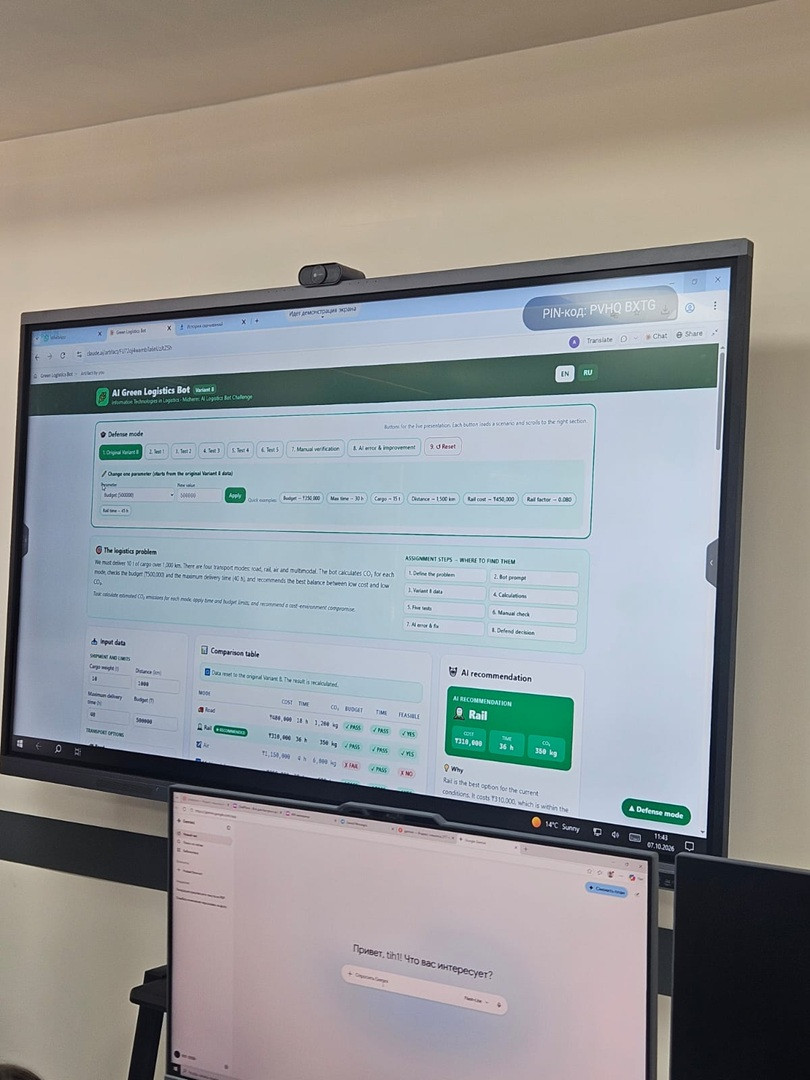
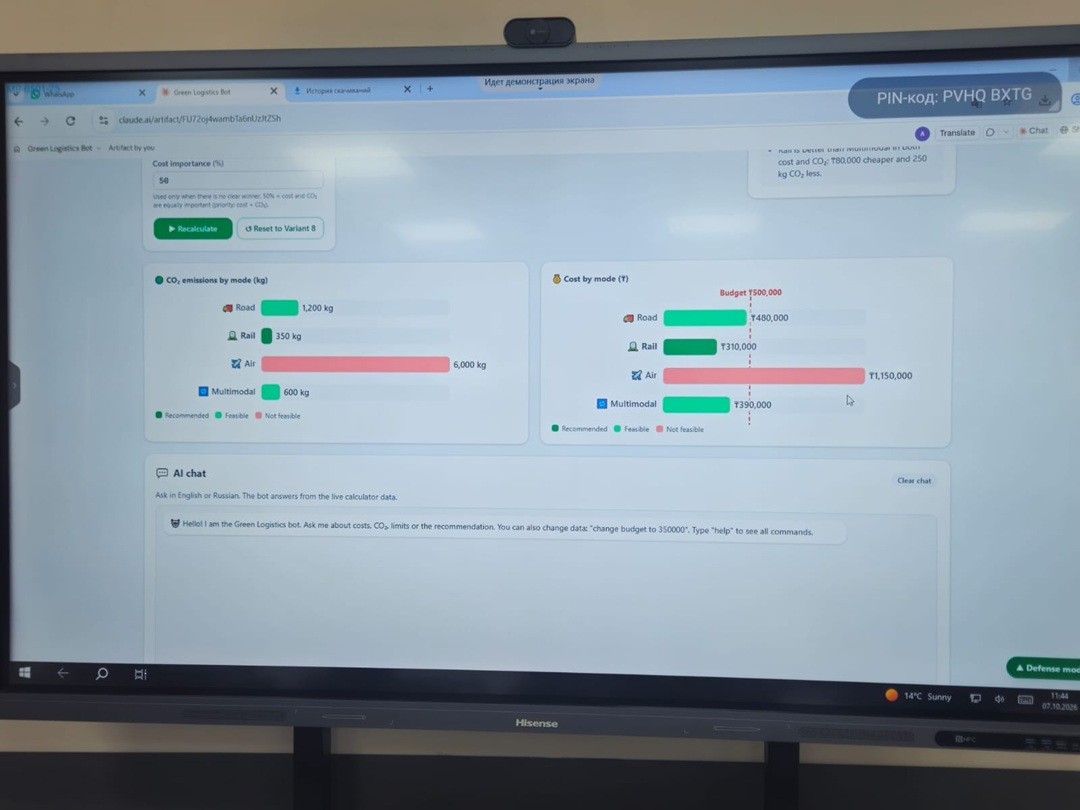
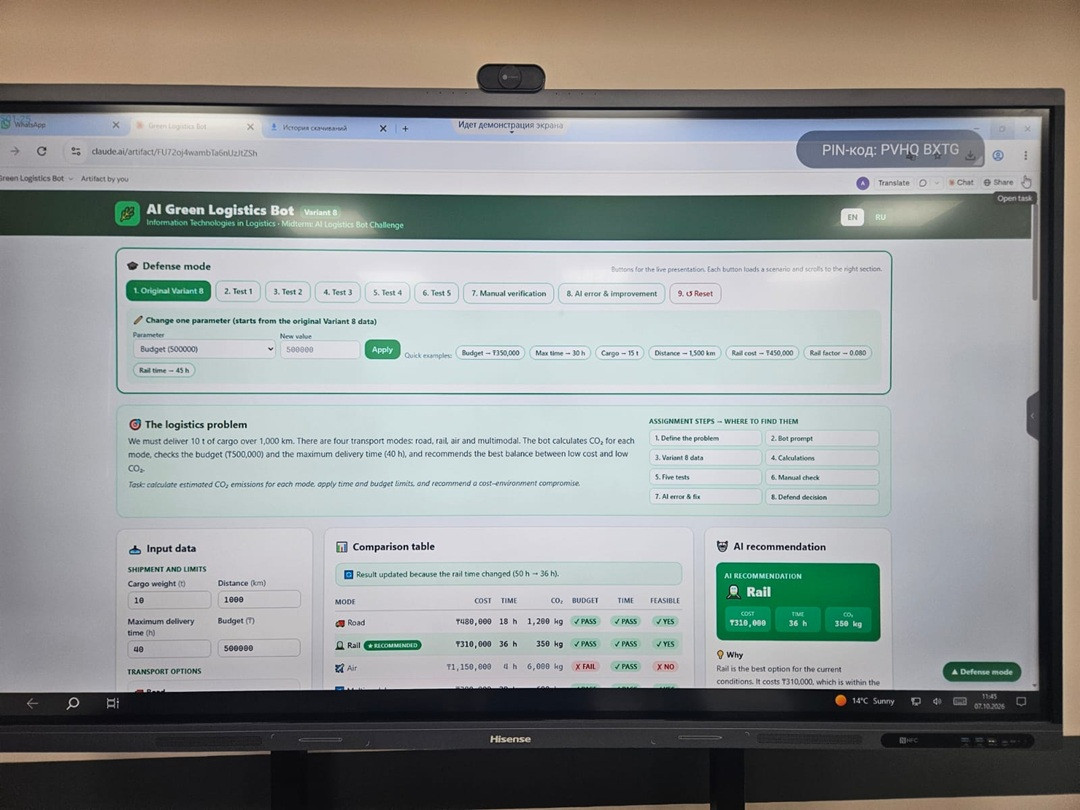
Miras Maratuly Zhumagazy presented his web-based project, “Green Logistics Bot,” designed to identify the most suitable freight transportation option by considering economic and environmental factors. The application allows users to compare road, rail, air, and multimodal transportation in terms of cost, delivery time, and CO₂ emissions. Based on the entered parameters, the system uses artificial intelligence to generate recommendations, helping users select a rational transportation solution. The project demonstrates how digital technologies can support green logistics and informed transportation decisions.
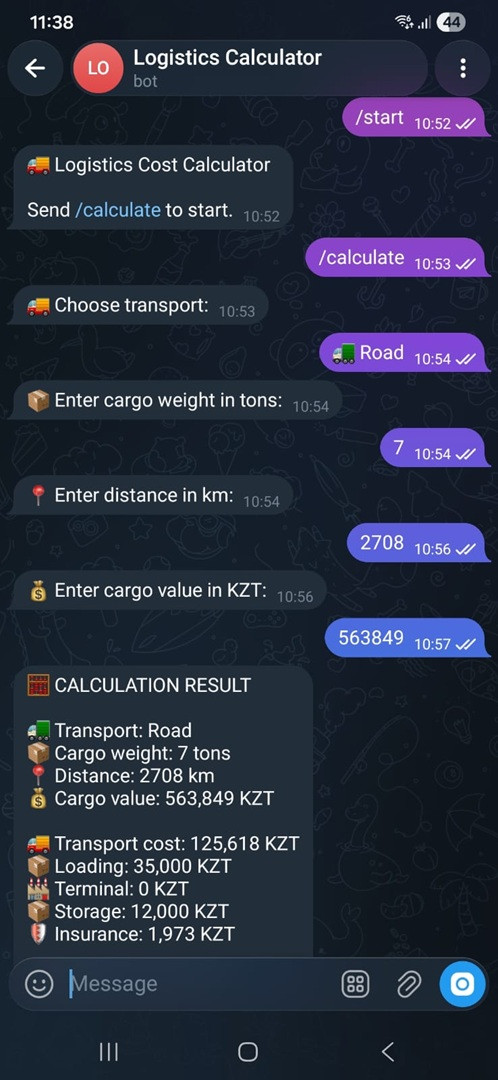
Yasmina Dilshatovna Baiuzakova developed a Telegram bot called “Logistics Calculator,” designed to automate logistics cost calculations. Users can select a mode of transport and enter cargo weight, transportation distance, and cargo value. The bot then generates a detailed cost breakdown, including transportation, loading operations, terminal services, storage, and insurance. During her presentation, Yasmina demonstrated the functionality of her project using a practical example, highlighting how chatbots can simplify preliminary freight cost estimation.
Ramina Muratkyzy Mukhamed presented her own Telegram bot developed as part of the individual assignment. She demonstrated its functionality and operating principles, showing how the knowledge acquired in information technology classes could be applied in practice. Her project became another example of independent learning, the use of modern digital tools, and the implementation of an original idea.
The practical class was conducted in an interactive format based on knowledge sharing and peer-to-peer learning. Students not only demonstrated their projects but also explained their operating algorithms, discussed potential practical applications, and shared their experiences in overcoming challenges encountered during development.
Importantly, the projects went beyond theoretical concepts and represented functional digital solutions demonstrating opportunities for automating logistics processes, performing calculations, and applying modern information technologies.
This educational format allowed students to experience the roles of both instructors and developers, demonstrate independence and initiative, and strengthen their public speaking, analytical thinking, reasoning, and professional communication skills.
Student Self-Government Day became more than just an educational event for the students of group ML-25-1. It provided an opportunity to demonstrate their knowledge, creativity, and ability to independently develop digital products.
ALT University continues to support student initiatives and promote practice-oriented education, placing particular emphasis on digitalization, project-based learning, and innovative approaches to preparing future professionals for the transport and logistics industry.
- SDG 4 — Quality Education — developing students’ digital competencies, independence, project-based learning, and knowledge-sharing skills.
- SDG 9 — Industry, Innovation and Infrastructure — developing student-led digital solutions and applying information technologies to automate logistics processes.
- SDG 13 — Climate Action — using digital tools to assess CO₂ emissions and select environmentally responsible transportation options.
Author: Alik Asel