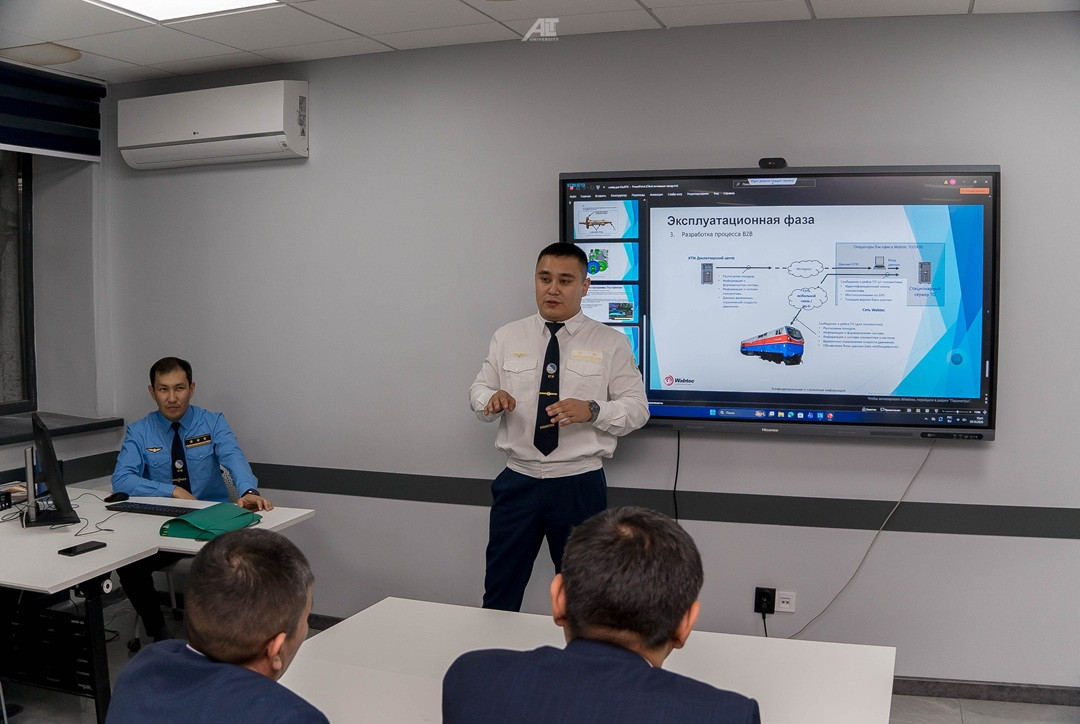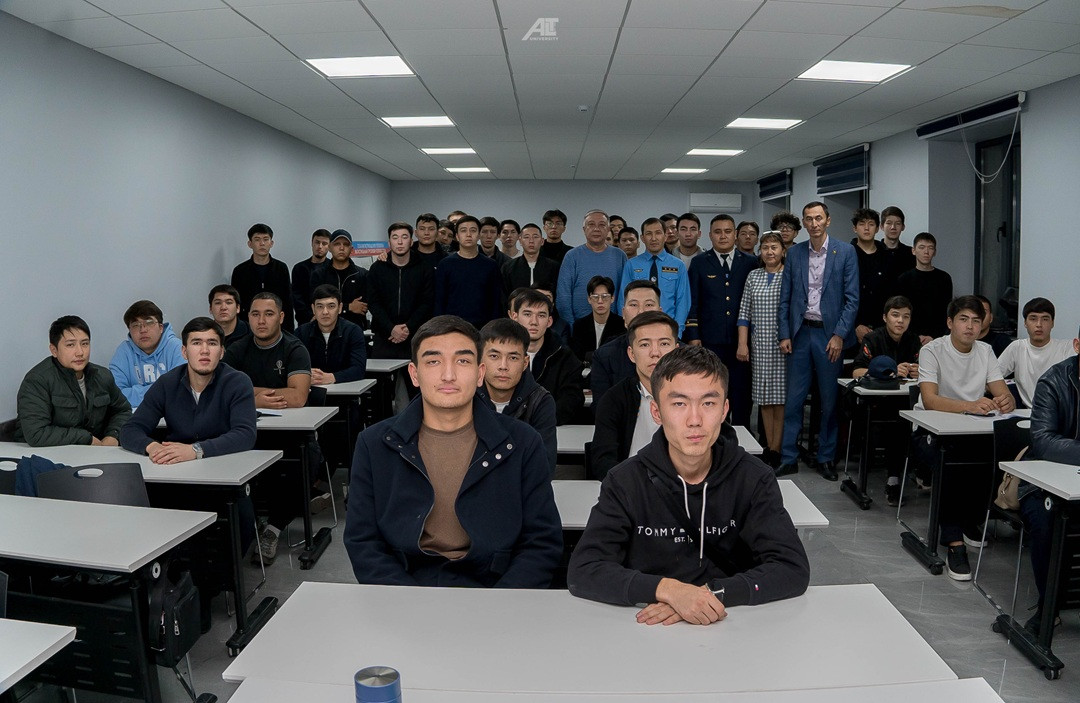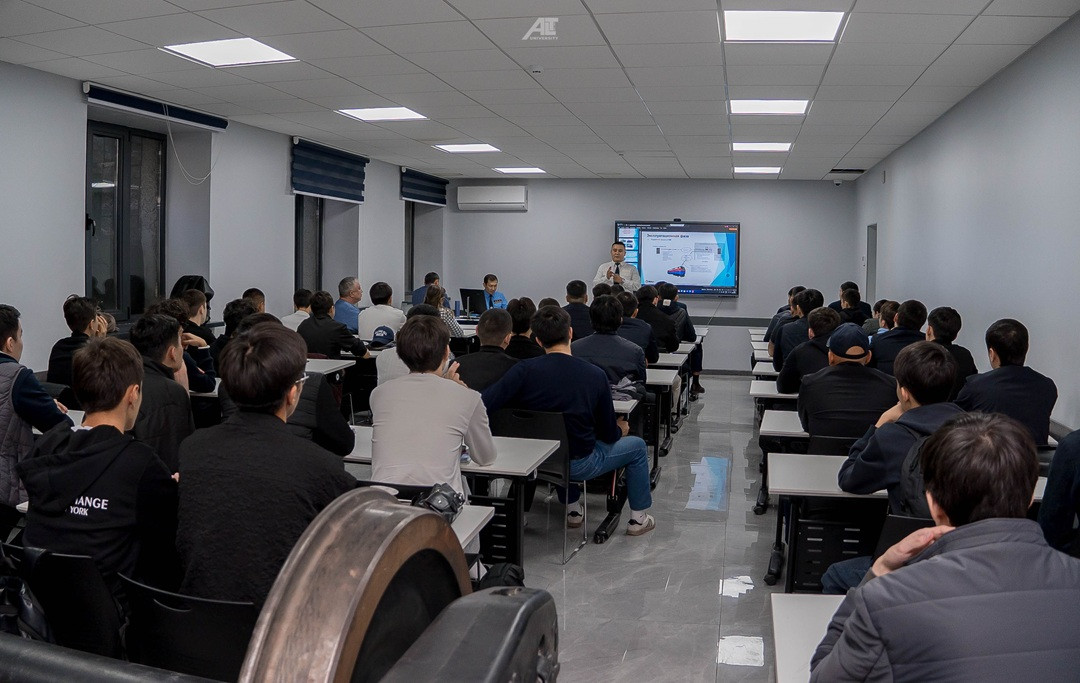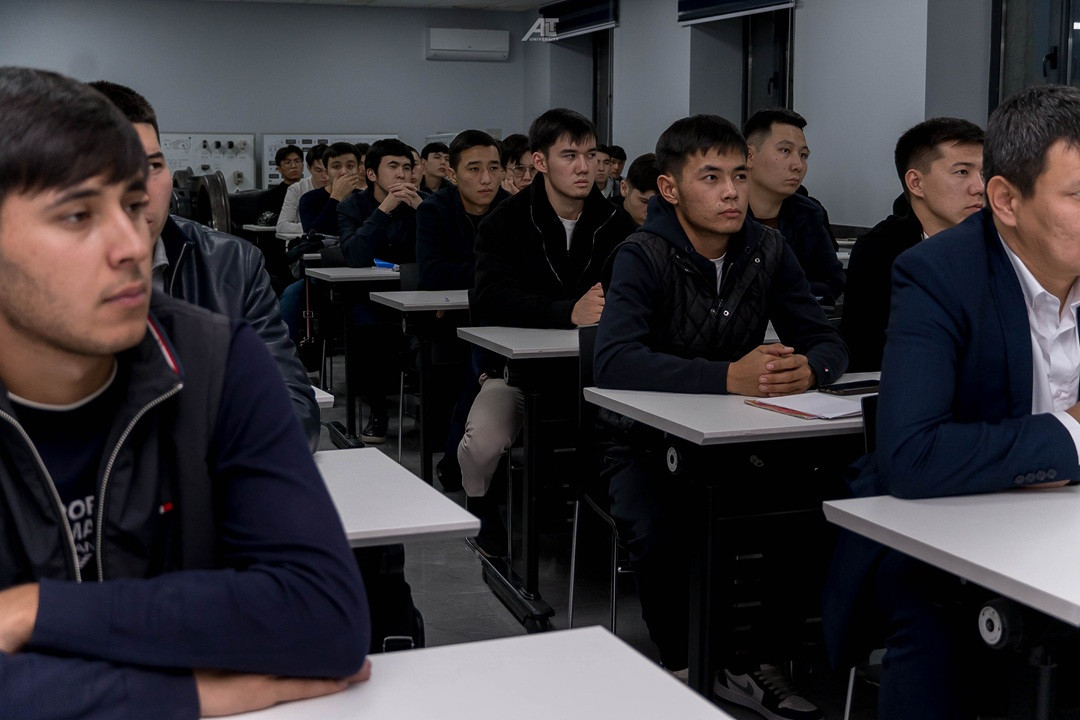
ALT University hosted a guest lecture titled «Modern Locomotives Used in Kazakhstan», aimed at expanding students’ professional knowledge and strengthening cooperation between higher education and railway industry enterprises.
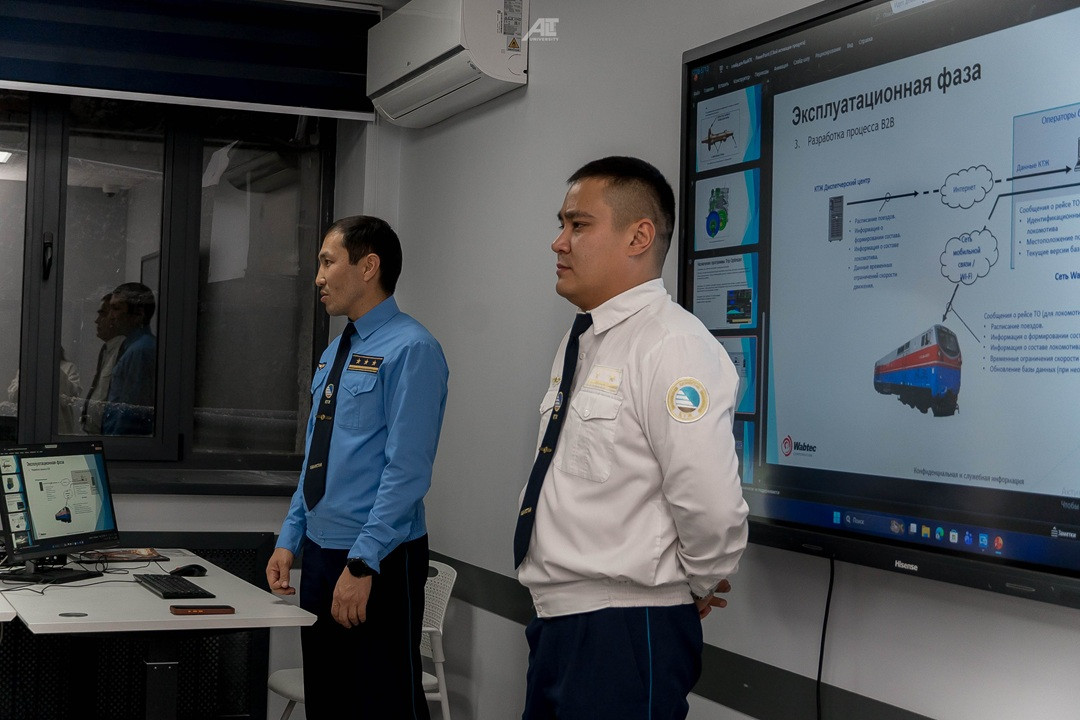
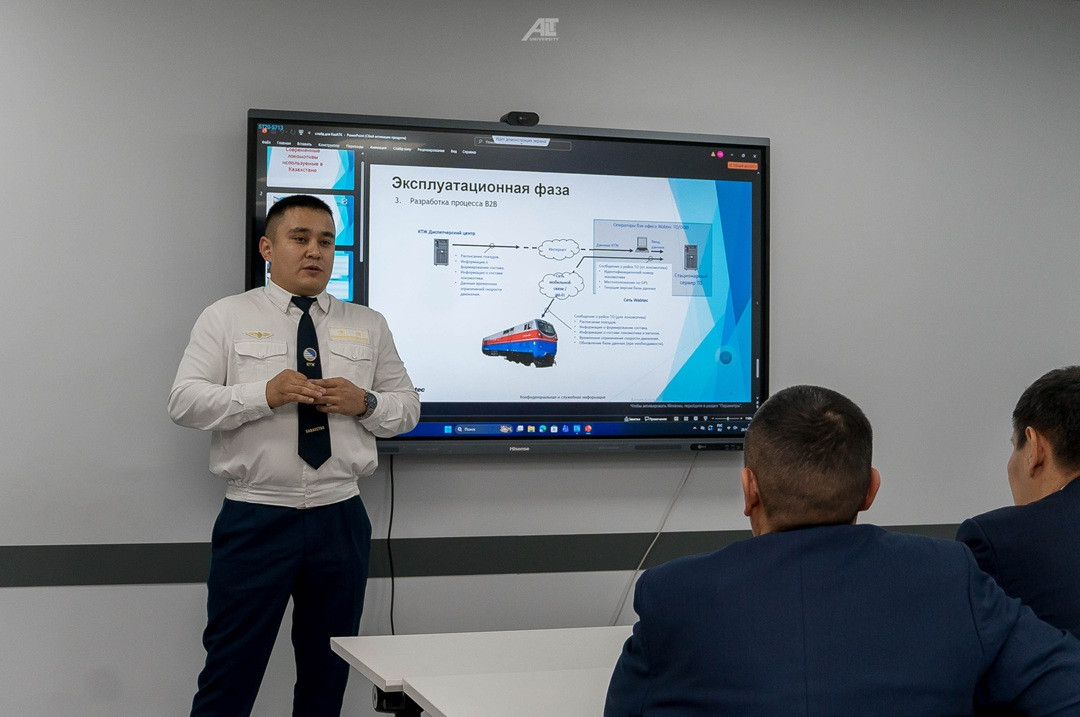
The speakers were M. Shaiakhmetov and A. Dauletkhan, instructor drivers at the Almaty Operational Locomotive Depot of the Almaty Freight Transportation Branch, a branch of KTZ – Freight Transportation LLP. The industry professionals shared their experience with students and discussed the characteristics and operational aspects of locomotives used on Kazakhstan’s railway network.
During the lecture, participants learned about the modern locomotive fleet and its importance in ensuring uninterrupted train operations and organizing freight transportation. Particular attention was paid to the practical aspects of locomotive depot operations, the specific responsibilities of locomotive drivers, and the professional requirements for specialists responsible for railway safety and operational efficiency.
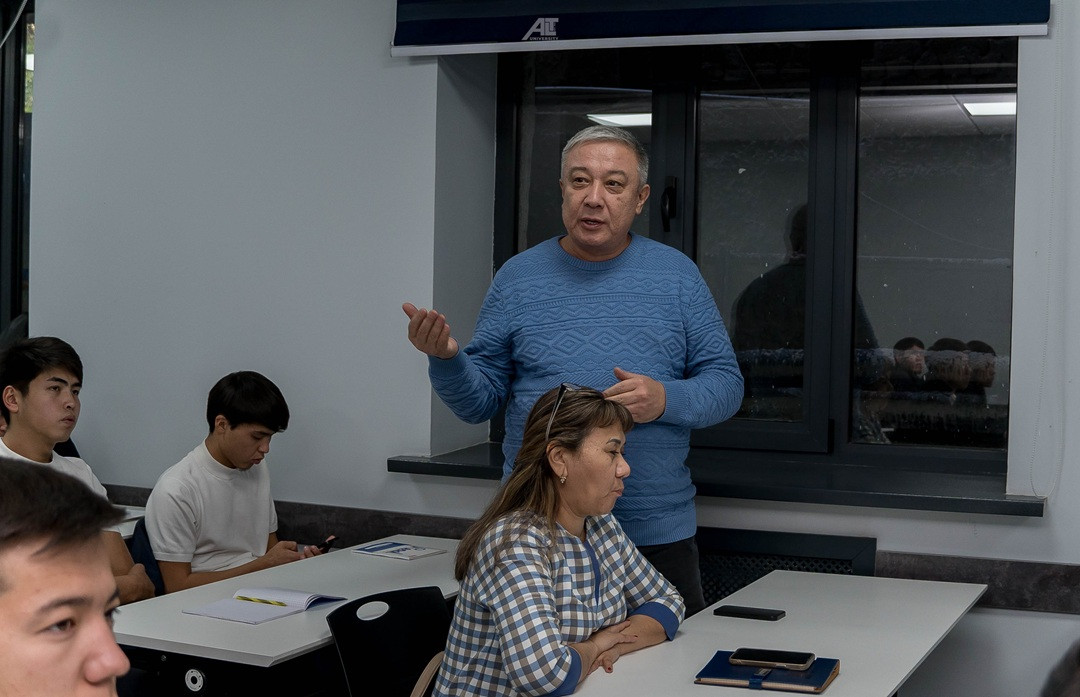
The lecture provided students with an opportunity to gain first-hand insights from industry practitioners, learn more about the day-to-day work of locomotive personnel, and connect the theoretical knowledge acquired at university with the realities of railway rolling stock operations. Interaction with experienced professionals also helped students better understand the importance of professional training, technical competence, and responsibility in the railway sector.
Engaging industry professionals in the educational process is an important component of practice-oriented learning. Such meetings help students develop a comprehensive understanding of their future careers, broaden their professional outlook, and become familiar with current challenges facing Kazakhstan’s railway transport sector.
ALT University continues to strengthen its cooperation with enterprises in the transport industry, creating additional opportunities for students’ professional development, the exchange of practical expertise, and the training of qualified specialists. Collaboration with employers helps align academic programmes with industry needs and prepares future graduates for the demands of their professional careers.
Author: Abdikalikova L. B.