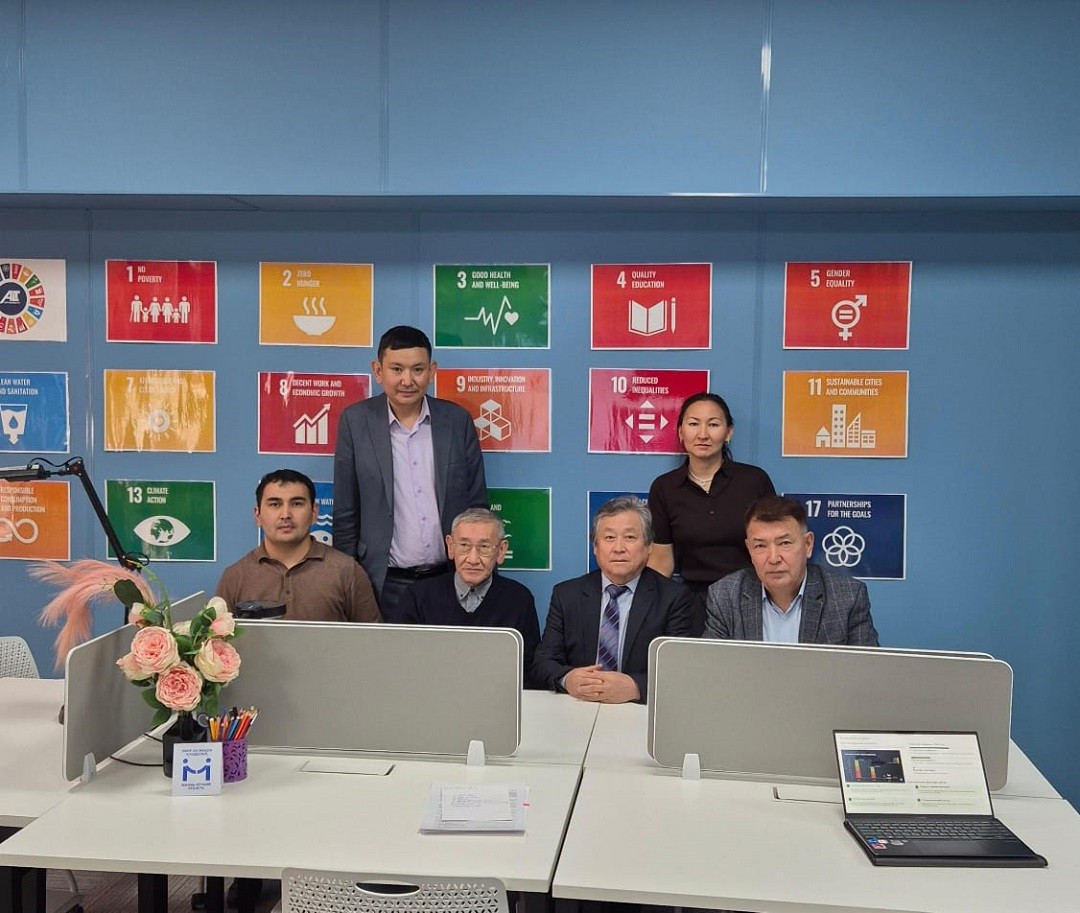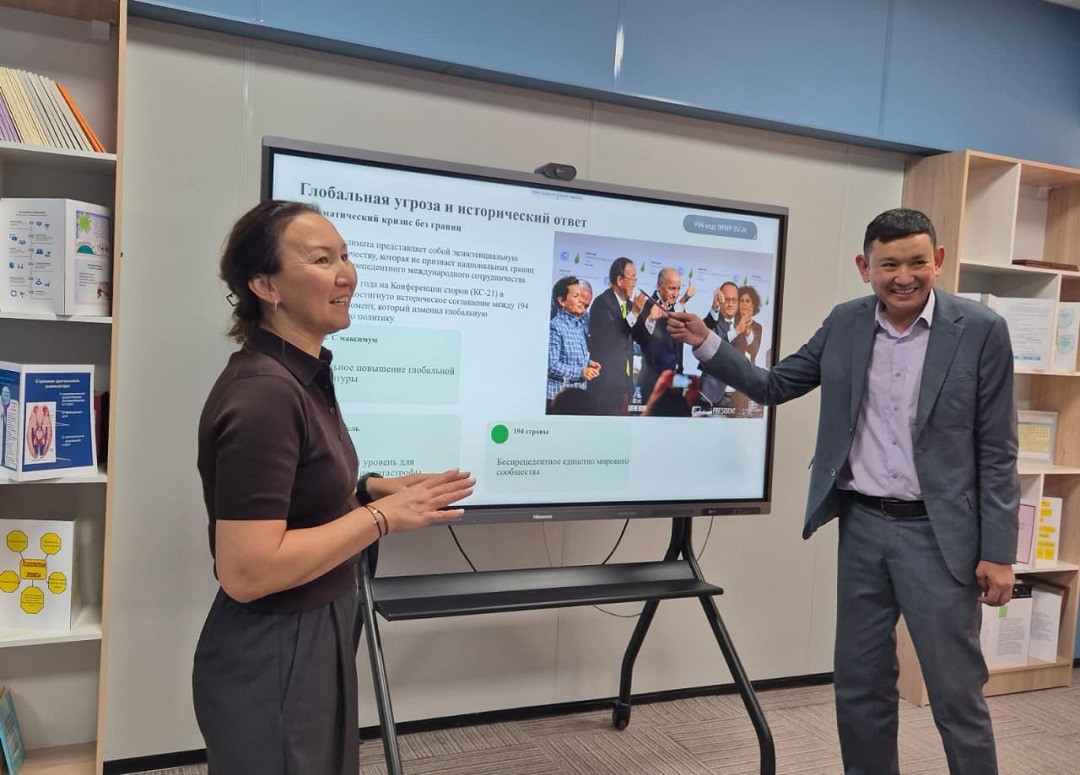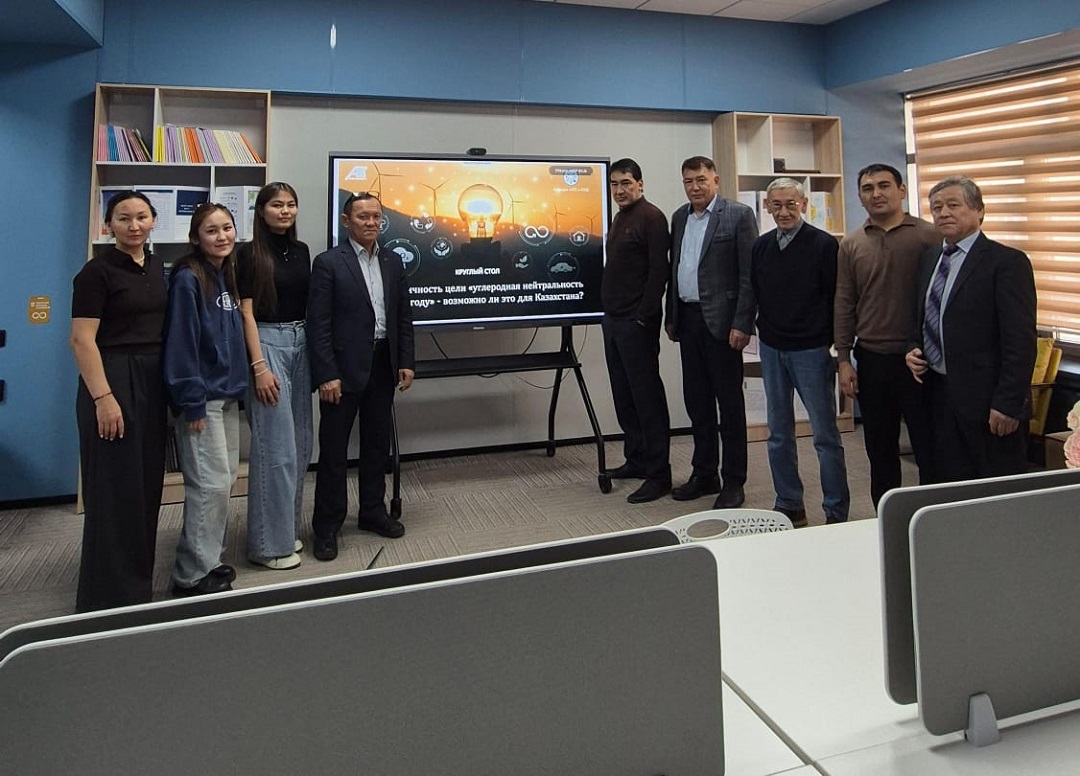
Within the framework of the implementation of the UN Sustainable Development Goals — SDG 7 “Affordable and Clean Energy”, SDG 9 “Industry, Innovation and Infrastructure”, SDG 11 “Sustainable Cities and Communities”, SDG 12 “Responsible Consumption and Production”, and SDG 13 “Climate Action”, on November 28, 2024, a round table was held in the co-working space of ALT University, organized by the Life Safety Cycle of the “ATS and Life Safety” Department, on the topic “The Realism of Achieving Carbon Neutrality by 2060 for Kazakhstan.”
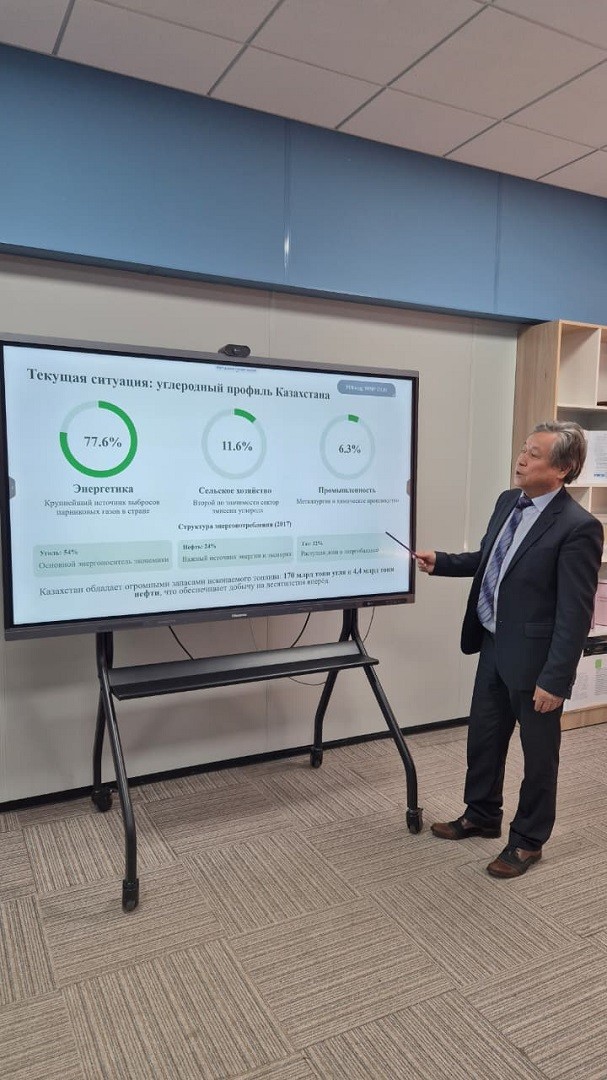
The discussion focused on Kazakhstan’s international and national climate commitments under the Paris Agreement, the structure of greenhouse gas emissions, as well as realistic scenarios for the decarbonization of the economy under conditions of high carbon intensity.
The opening address was delivered by Associate Professor Kalybekova E.M., who emphasized the relevance of the climate agenda and the global nature of climate change. In their reports, Associate Professor of ALT University Bimagambetova L.N. and Senior Lecturer Kurmashev B.B. considered the following issues:
- the role of Kazakhstan in the implementation of the Paris Agreement,
- the structure of greenhouse gas emissions by economic sectors,
- prospects for the development of renewable energy sources,
- the introduction of carbon capture and storage (CCS) technologies.
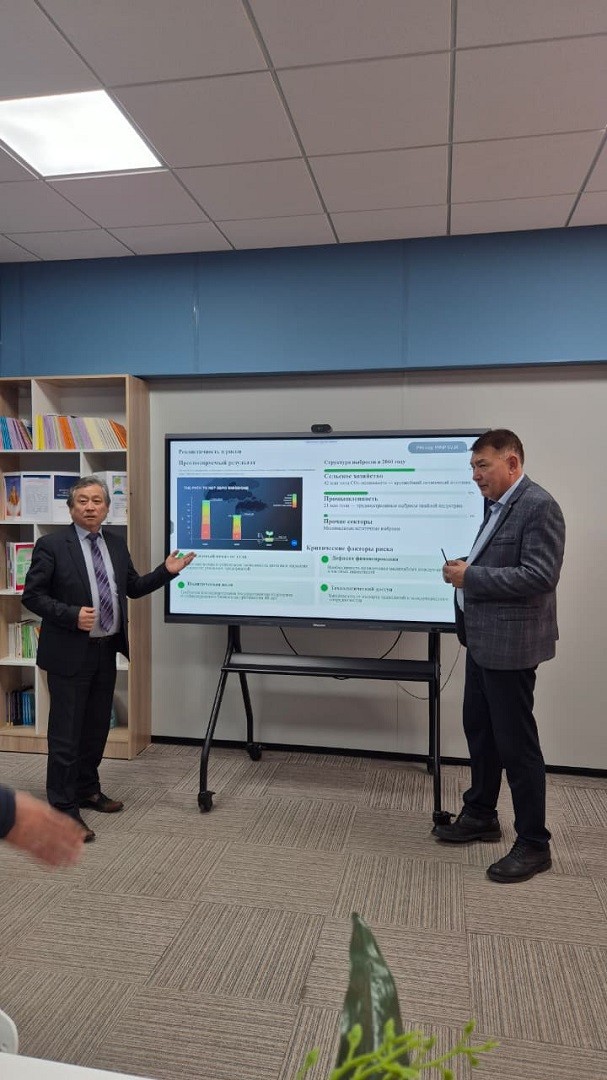
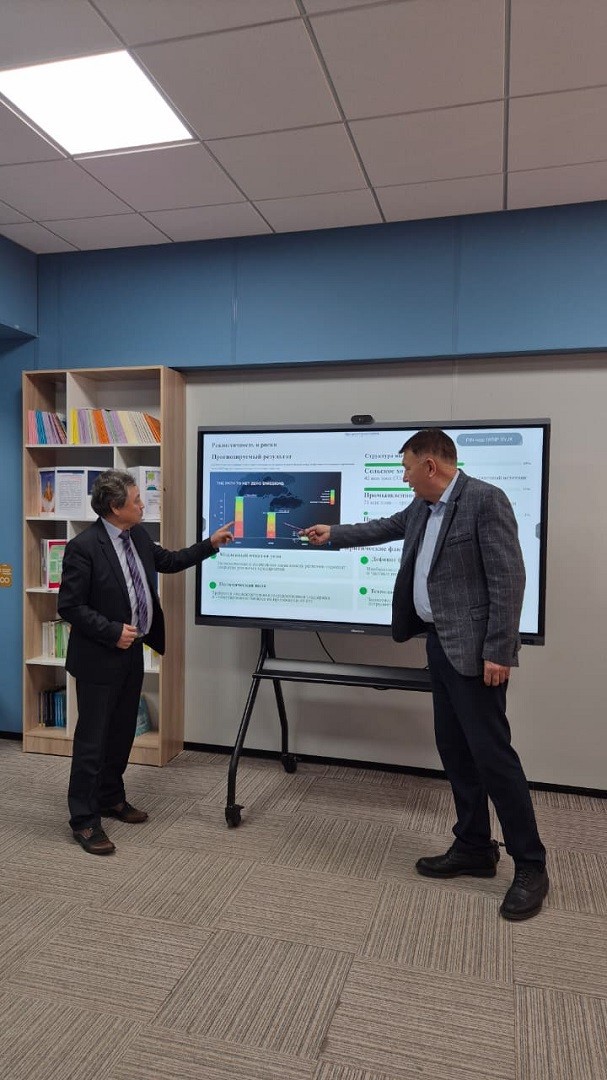
Associate Professor Dyusembin E.A. and Senior Lecturer Torgayev A.A. spoke about the level of readiness of cities and transport infrastructure for the “green” transformation, as well as Kazakhstan’s national plans and transition pathways to 2060, emphasizing the importance of sustainable transport in reducing the carbon footprint.
Special attention was paid to the issues of a just energy transition, social risks for coal-mining regions, and the role of higher education institutions in training specialists for the “green economy” within the framework of SDG 4 “Quality Education” and SDG 8 “Decent Work and Economic Growth.”
As a result of the discussion, participants concluded that achieving carbon neutrality by 2060 is an ambitious but feasible goal, provided that it is supported by consistent public policy, large-scale investment in low-carbon technologies, international cooperation, and the active involvement of the scientific community.
The round table became a significant expert platform for developing practical recommendations in the fields of climate policy, sustainable development, and ESG transformation, and also strengthened ALT University’s contribution to the national sustainable development agenda and its positioning in the QS Sustainability Rankings.