Today, Artificial Intelligence is increasingly becoming part of daily life, transforming approaches to work, education, and scientific research. These technologies already assist in data analysis, process automation, the creation of new solutions, and making routine tasks simpler and faster. Questions are frequently raised: How exactly do scientists use neural networks, can they replace humans, and what will their impact be on the future of science and daily life?
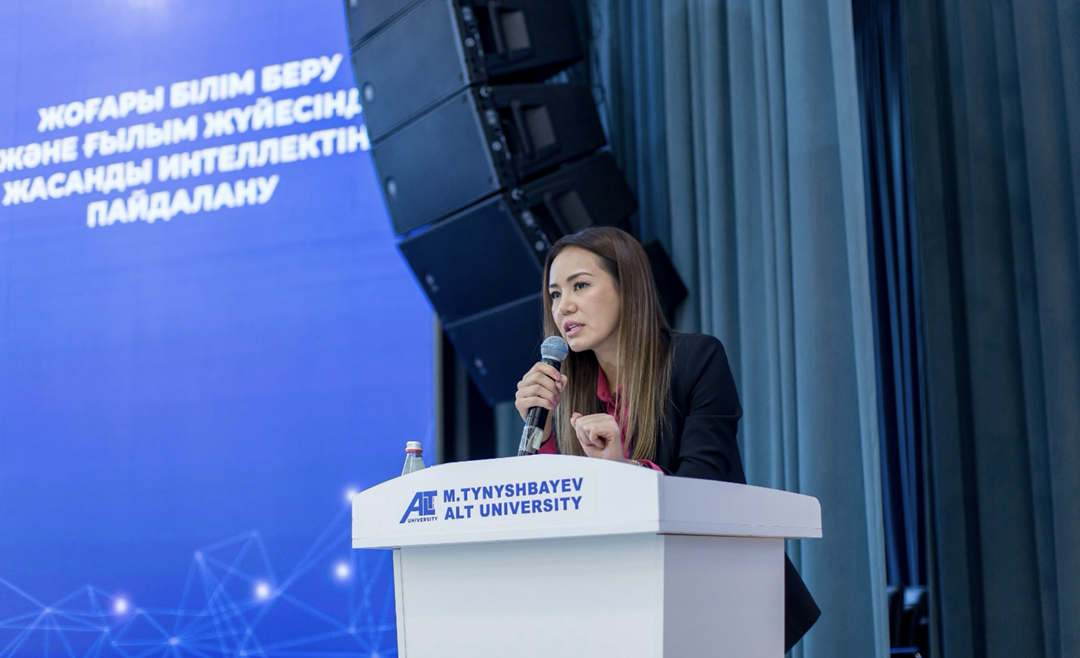
Gulzana Serikova, founder of the ALT Educational Corporation in Kazakhstan—which encompasses one university, six colleges, and one school—shared her insights with Liter.kz.
As a representative of a technical university specializing in digital economy, logistics, and engineering, Gulzana Serikova observes how applied science in Kazakhstan is adapting to new technological realities and how requirements for specialist training in the country’s key industries are evolving.
– Do scientists use Artificial Intelligence in their work? – Absolutely. Today, AI has become an essential tool in the scientific environment. Modern researchers use it to analyze large datasets, model processes, test hypotheses, and find patterns that would be difficult for a human to detect manually. The primary advantage of AI is speed. Where information processing used to take months, it can now be completed in a matter of hours. Therefore, for scientists, AI is not a replacement but a powerful assistant that allows them to focus on ideas and discoveries.
– In which scientific fields is AI applied most frequently? – Today, AI is actively used in almost all areas of science. Based on the experience of our university and scientists, these include transport and logistics, engineering, IT, construction, and intelligent control systems. For example, in logistics, AI helps forecast cargo flows and reduce the risks of congestion. In engineering, it models structures and improves calculation accuracy. In medicine, it analyzes images to aid in diagnostics. In education, it helps create personalized learning programs. In essence, AI has become a universal tool for the advancement of modern science.
– Can AI replace scientists? – Fully replace? No. Artificial Intelligence can calculate quickly, analyze, and find patterns, but it lacks human intuition, creativity, values, and accountability. We follow the formula: Human Intelligence + AI = Super-results. The machine takes over routine work, while the human defines the meaning, sets goals, makes decisions, and bears responsibility for the consequences. Therefore, it is more accurate to speak of a new format of collaboration between humans and technology rather than replacement.
– Do scientists use AI in their daily lives? – Of course. Today, many professors, researchers, and specialists use AI not only in their professional work but also in their private lives. For instance, it is used for daily planning, text processing, information searching, translating materials, creating presentations, analyzing trends, and automating daily tasks. This helps save time and redirect energy toward areas where human contribution is truly vital—creativity, communication, and mentorship.
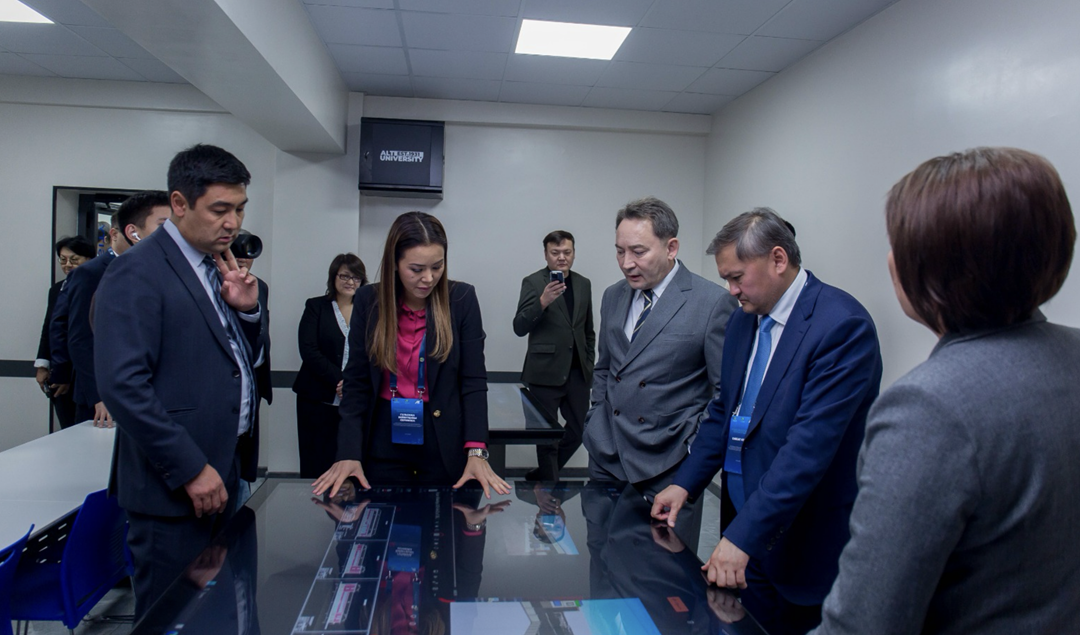
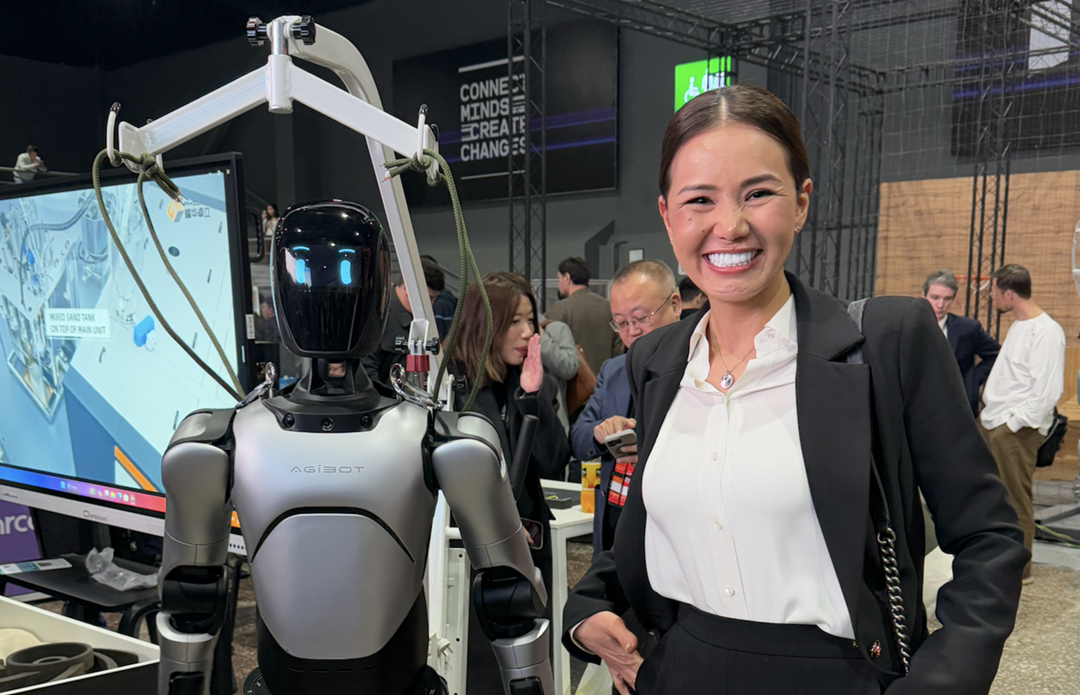
– Can an average person use AI in life? What are some simple examples of AI use at home? – Actually, AI has been around us for a long time. Many people use it daily without even noticing. These include voice assistants, smart speakers, navigators, movie and music recommendations, online translators, chatbots, security systems, and “smart home” devices. Our students are currently not only studying these technologies but also participating in their creation. The university has a specialized laboratory where future scenarios are modeled based on smart home systems and modern robots. Here, students teach machines to perform daily tasks: managing lighting and microclimate, monitoring room security, assisting in household processes, and improving human comfort.
– Does AI help in learning and research? – Yes, significantly. Artificial Intelligence is becoming a digital mentor. It helps students build individual learning trajectories, identifies weaknesses, recommends materials, and accelerates the mastery of complex topics. For researchers, AI is useful for rapidly analyzing international sources, translating scientific articles, structuring information, and finding necessary data. This allows scientists to spend less time on routine and more on actual discoveries.
– Are there risks in using AI? – Certainly, as with any technology, risks exist. These may include model errors, unreliable answers (so-called “hallucinations”), data leaks, dependence on automated decisions, and cybersecurity issues. That is why it is important not just to use AI, but to do so competently. We always say: “Trust the AI, but verify the algorithms.” Critical thinking and digital literacy remain key skills for the modern individual.
– What popular AI tools do scientists use? – Today, scientists and specialists use a wide range of AI tools. Among the most popular are Gamma App for creating presentations, Synthesia AI for videos with digital avatars, Gemini for analytics and text processing, and Perplexity AI for intelligent information searching. At ALT, these technologies are already integrated into the educational process. For example, all university professors have been granted access to Gamma App for preparing lectures. Furthermore, professors’ own digital avatars are used to create video lessons and new formats of interaction with students.
– How do you see the future of AI in science and daily life? – In education and science, we see the future of AI as a practical development tool. In science, digital laboratories will emerge where AI can perform modeling, analysis, and primary calculations 24/7, accelerating the path from idea to discovery. In daily life, technologies will become a natural part of the environment, assisting with education, finance, security, and routine tasks. Our goal is to ensure that technology serves the human being, helps develop the economy, and improves the quality of life for society.