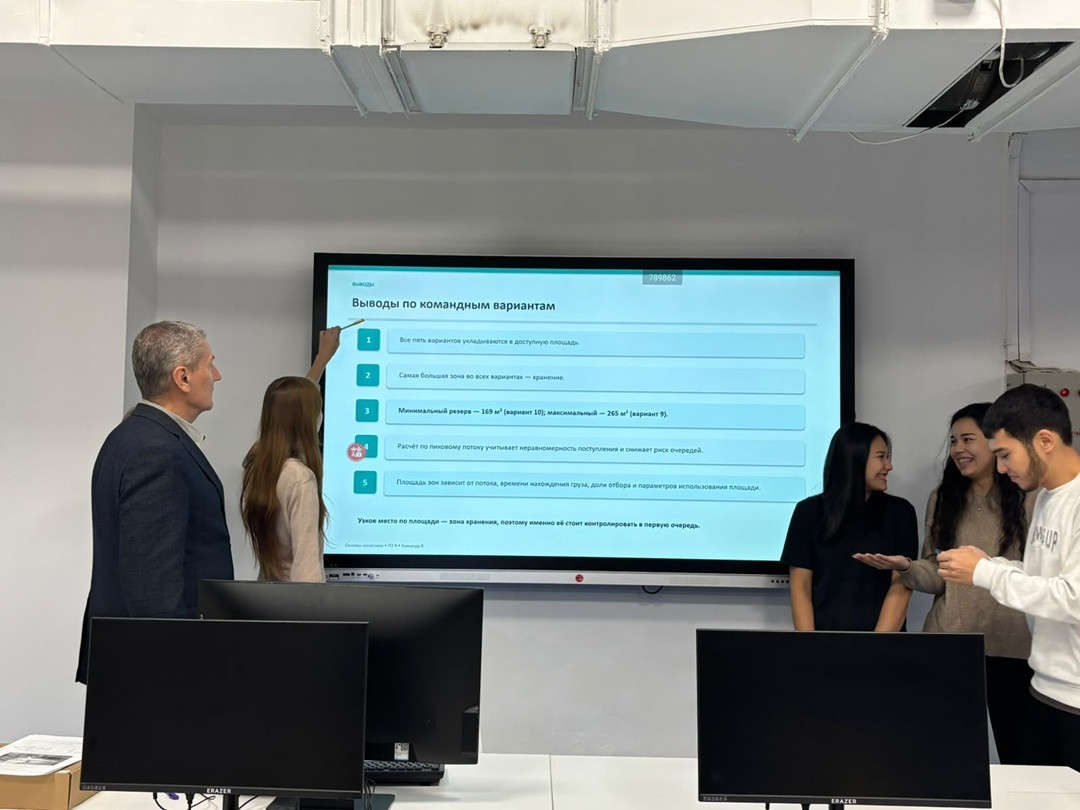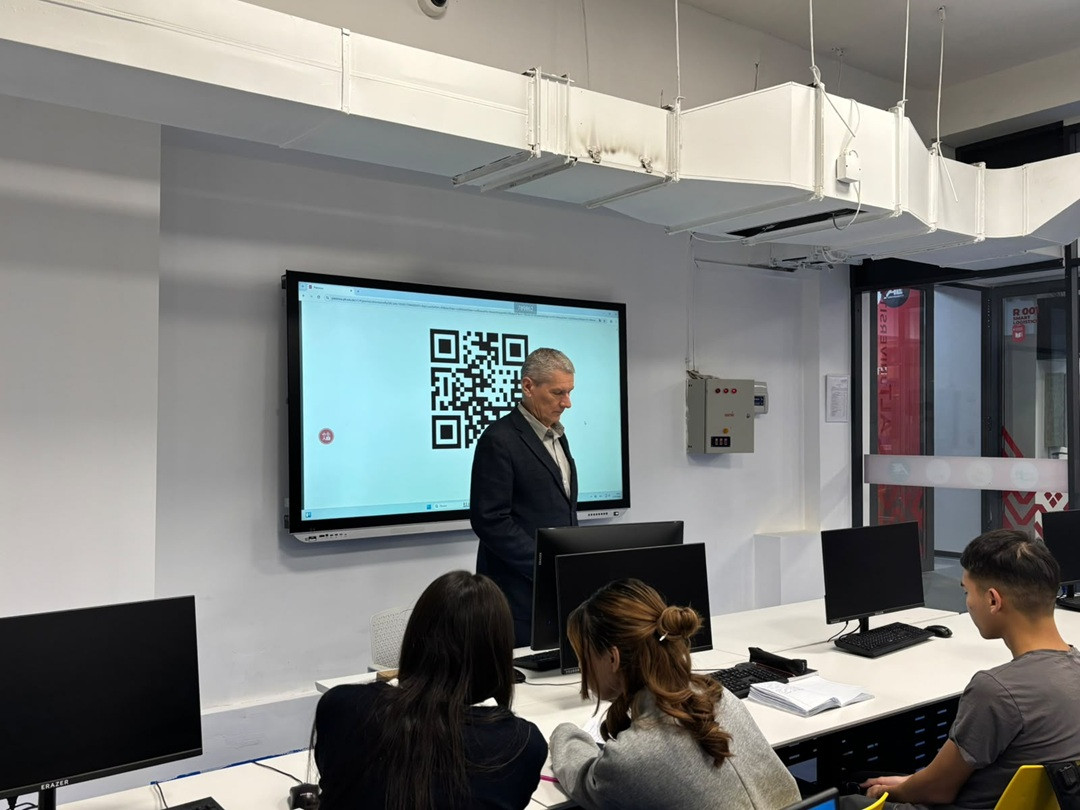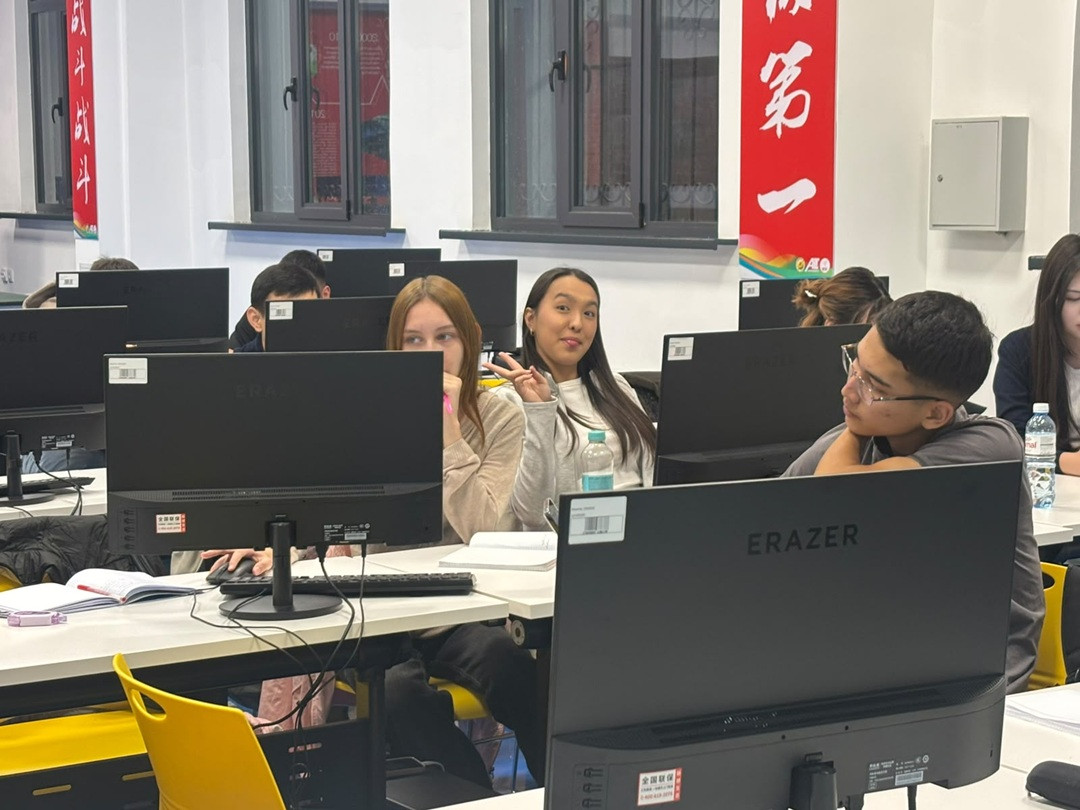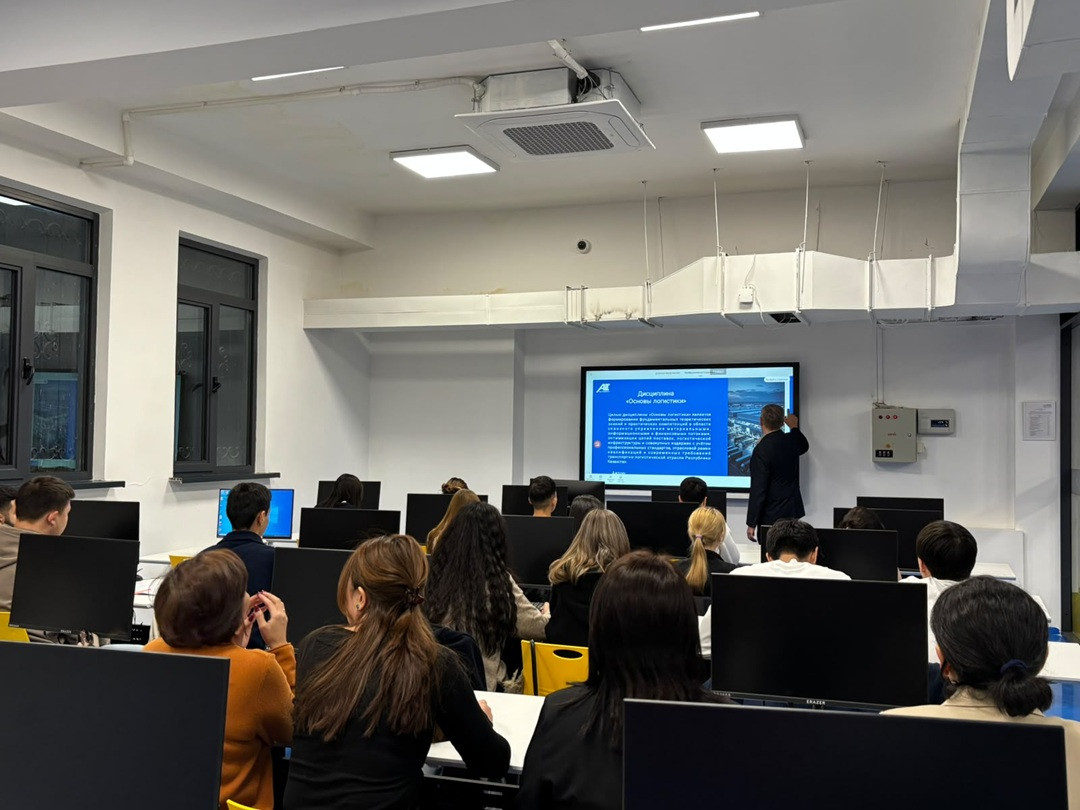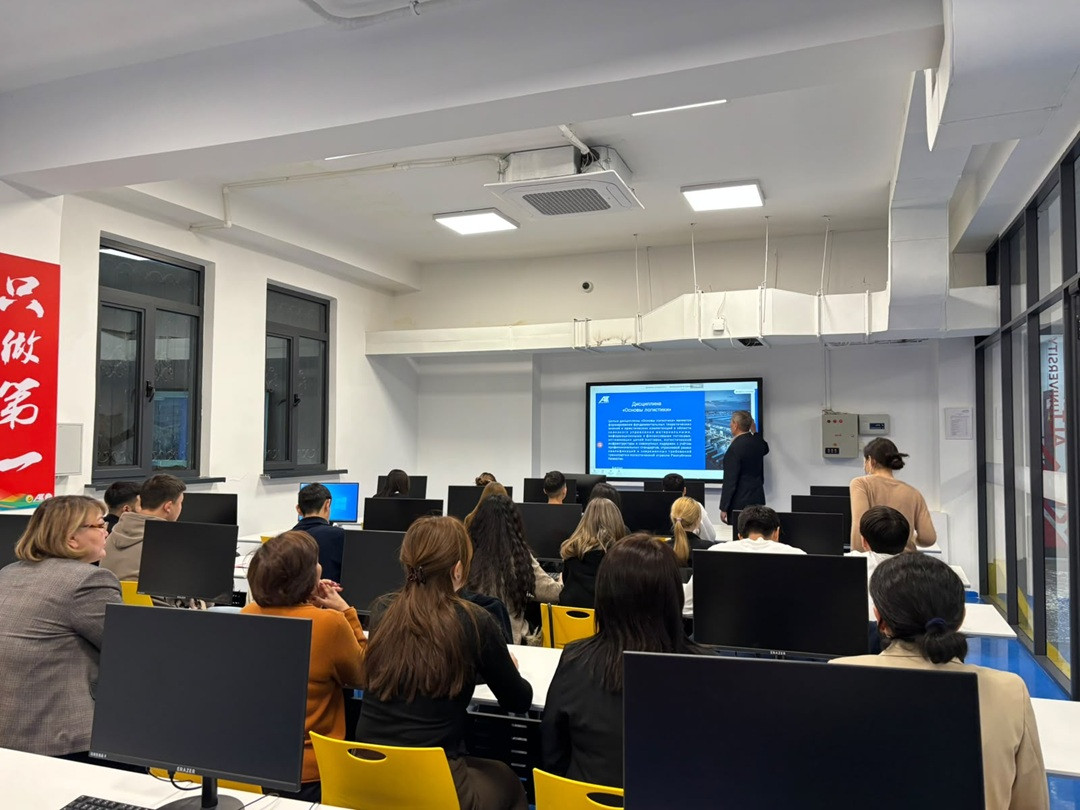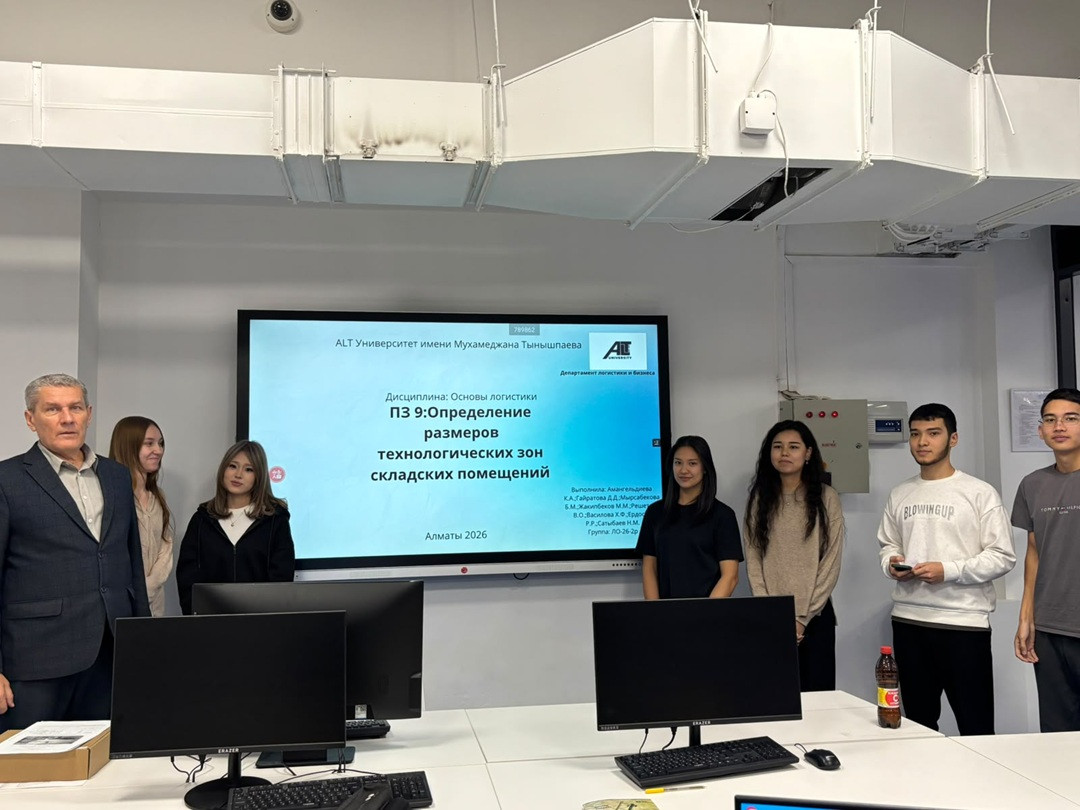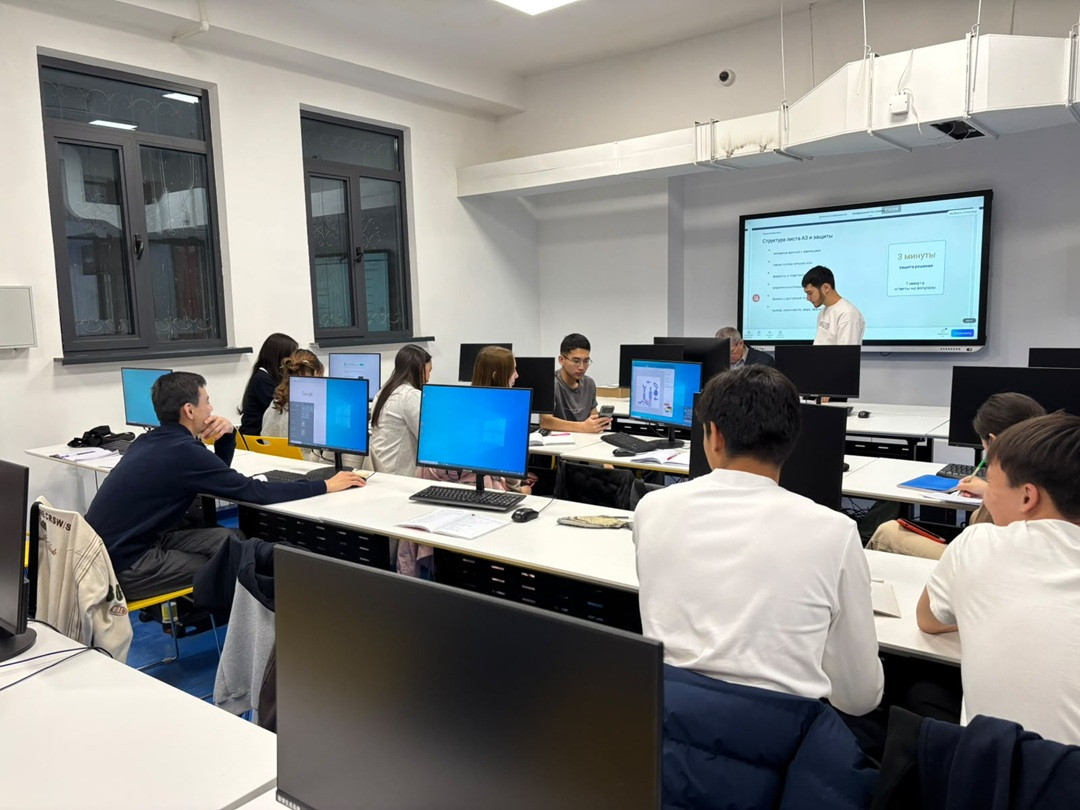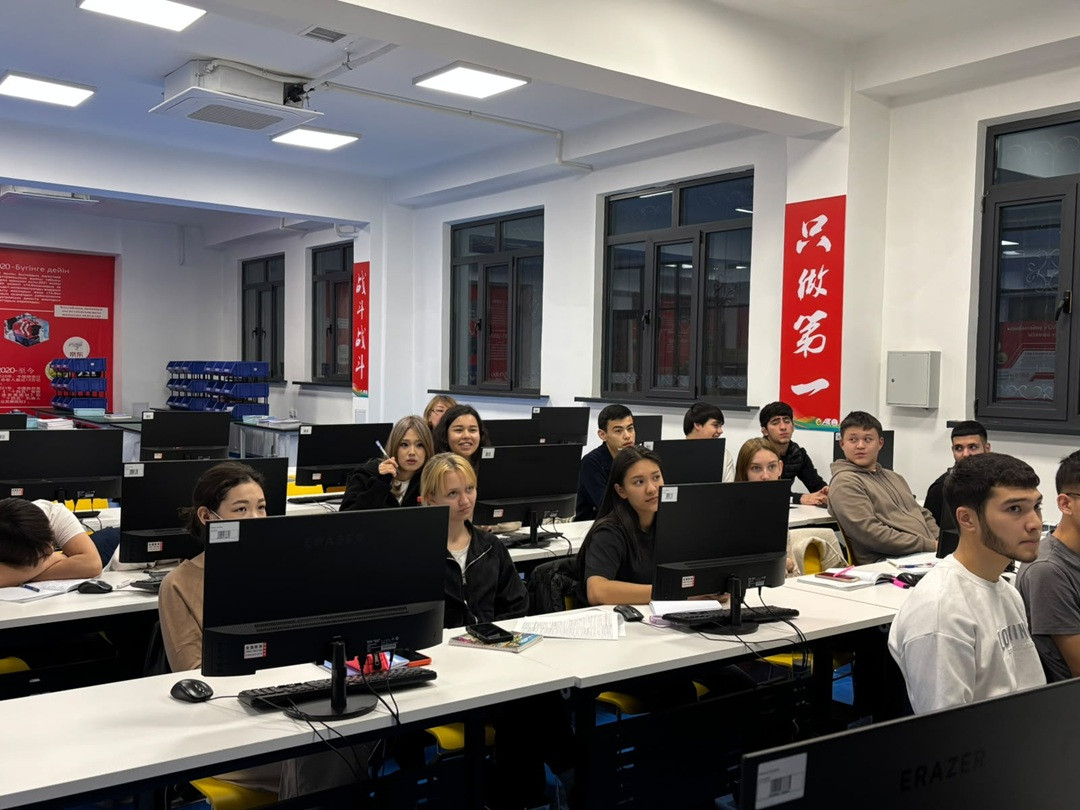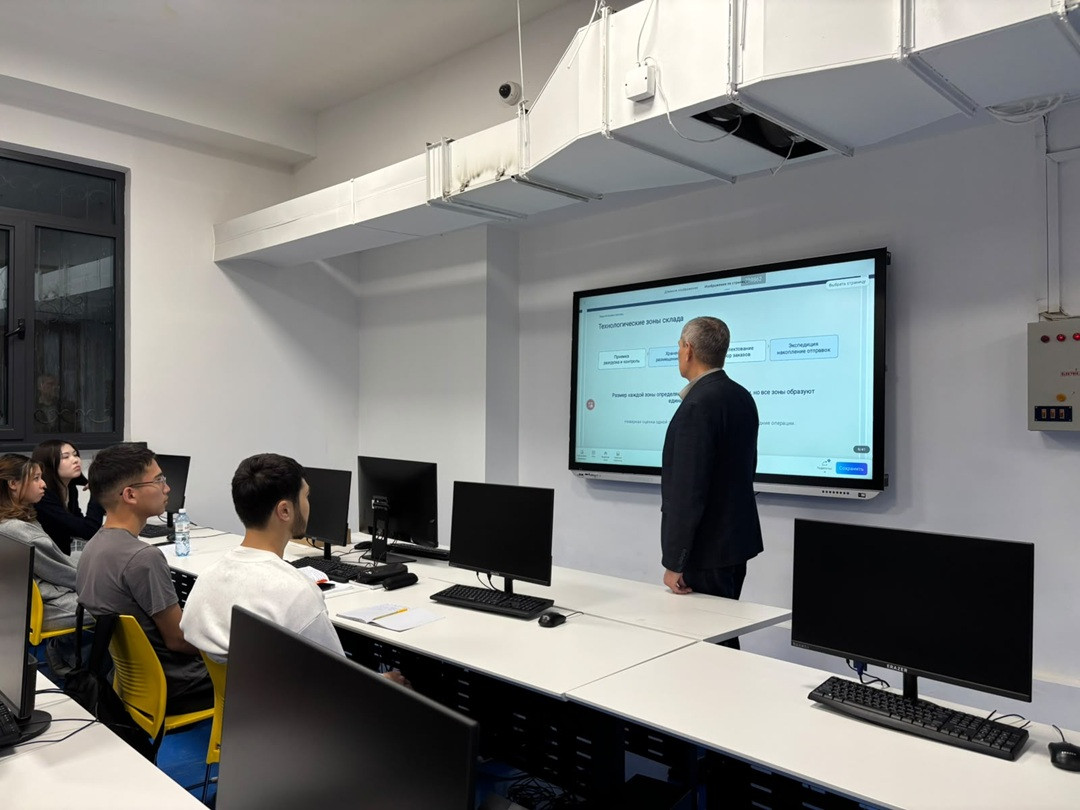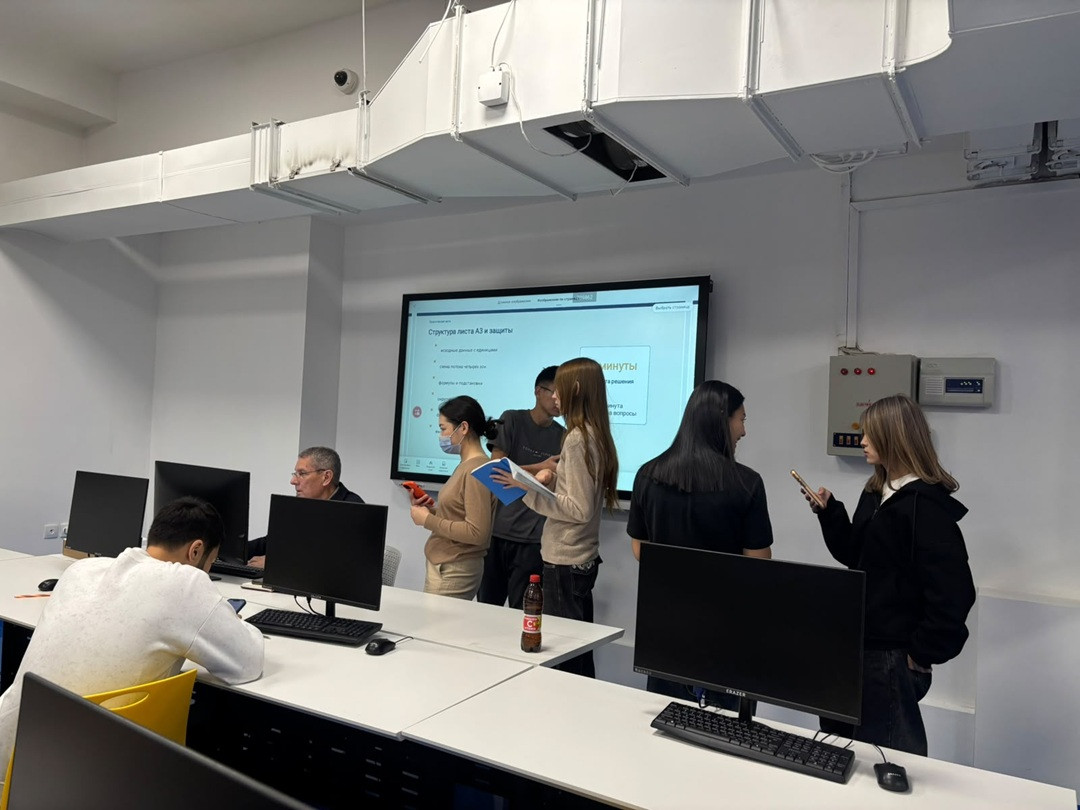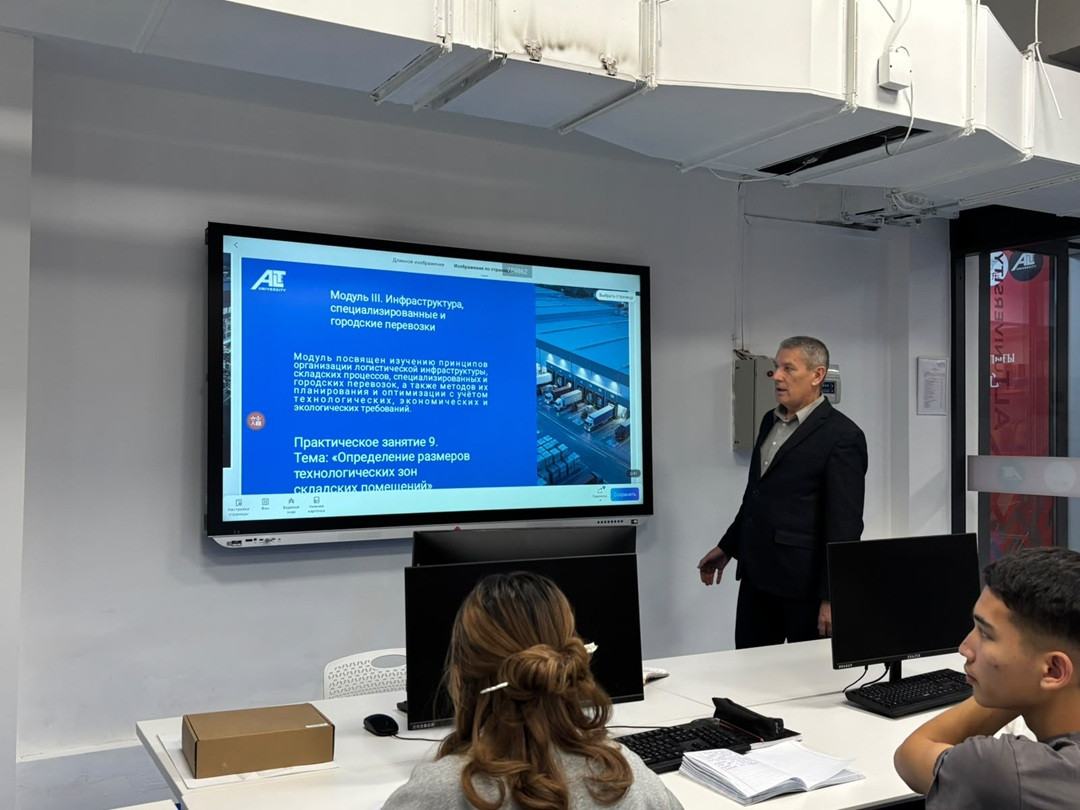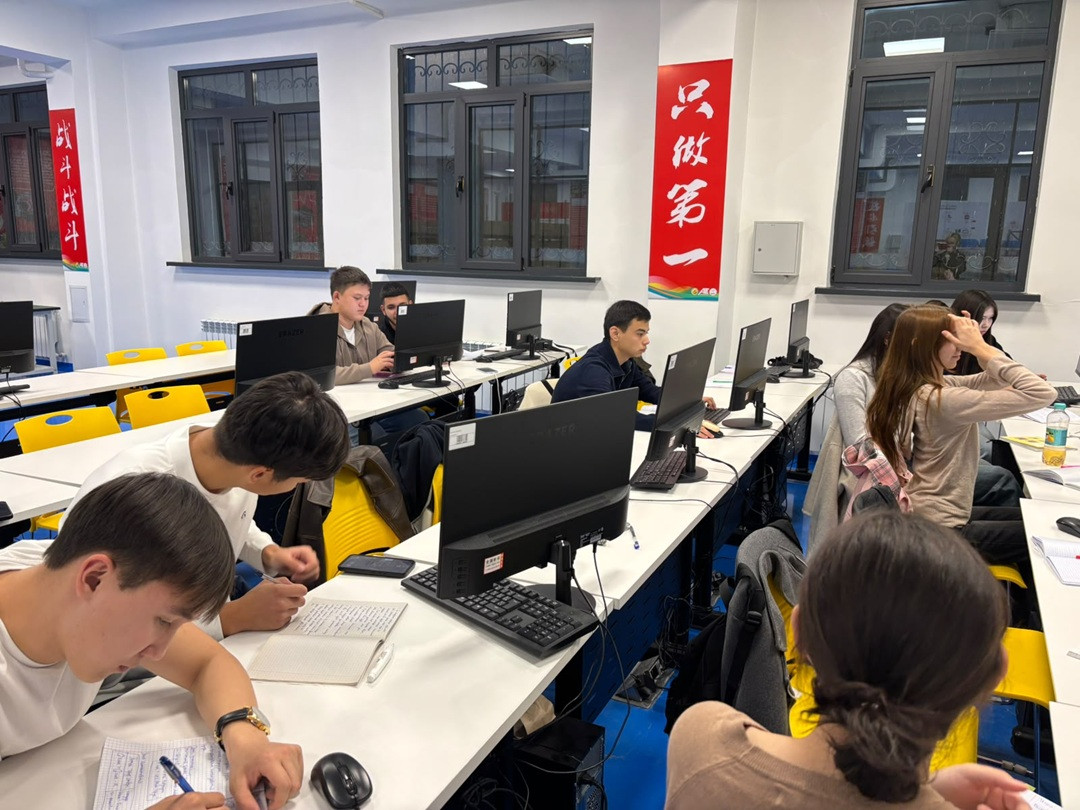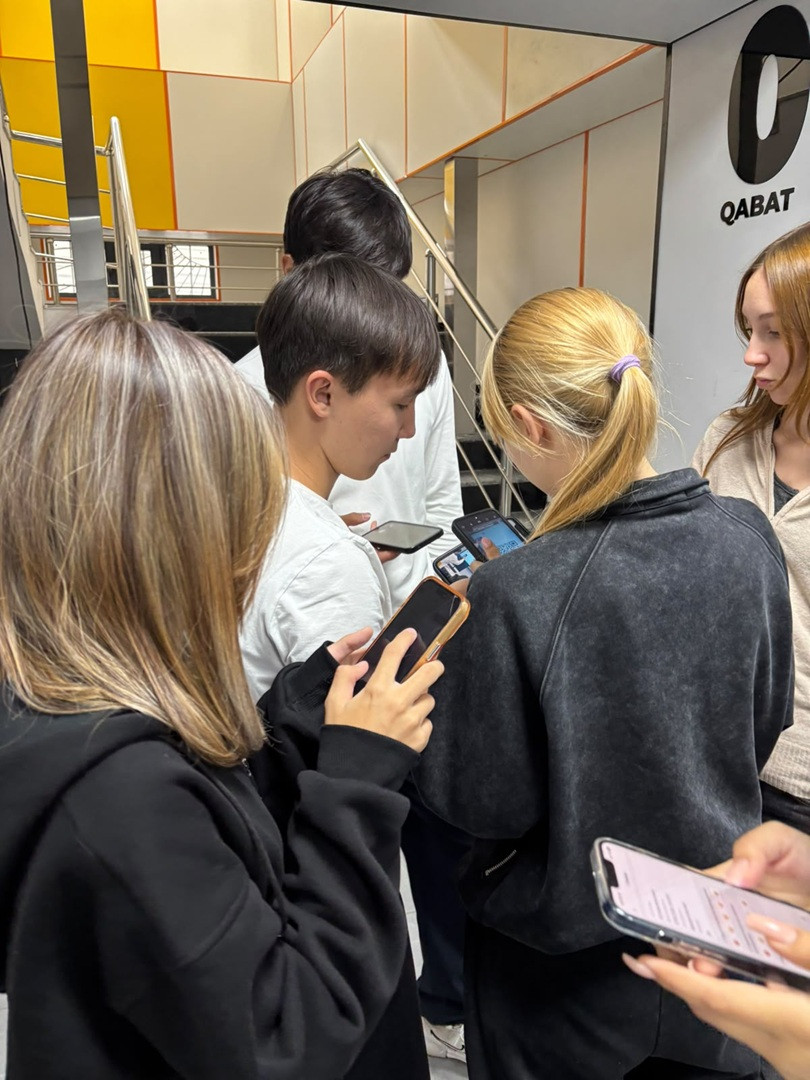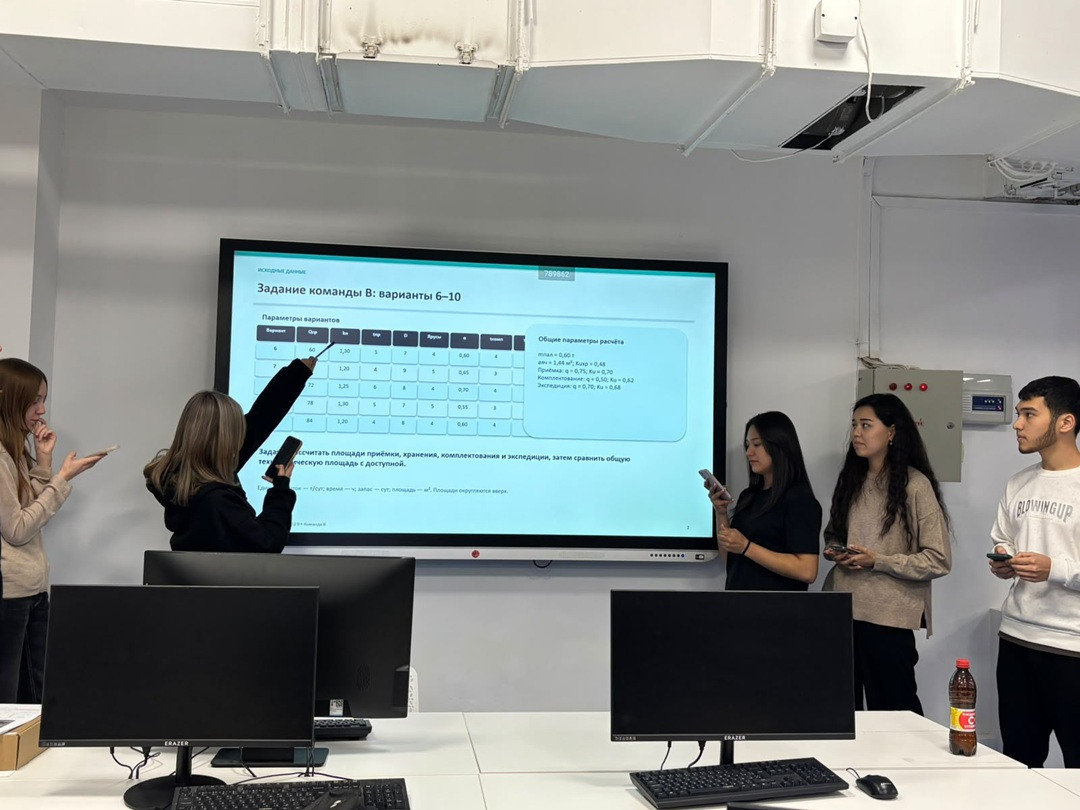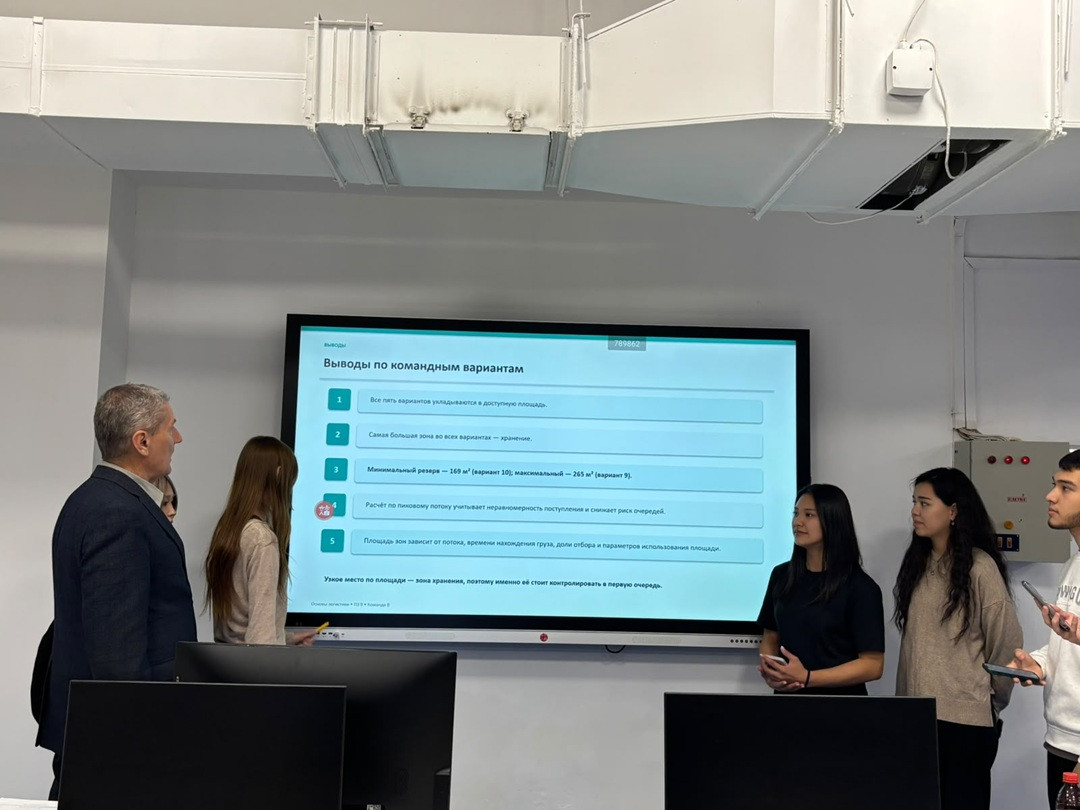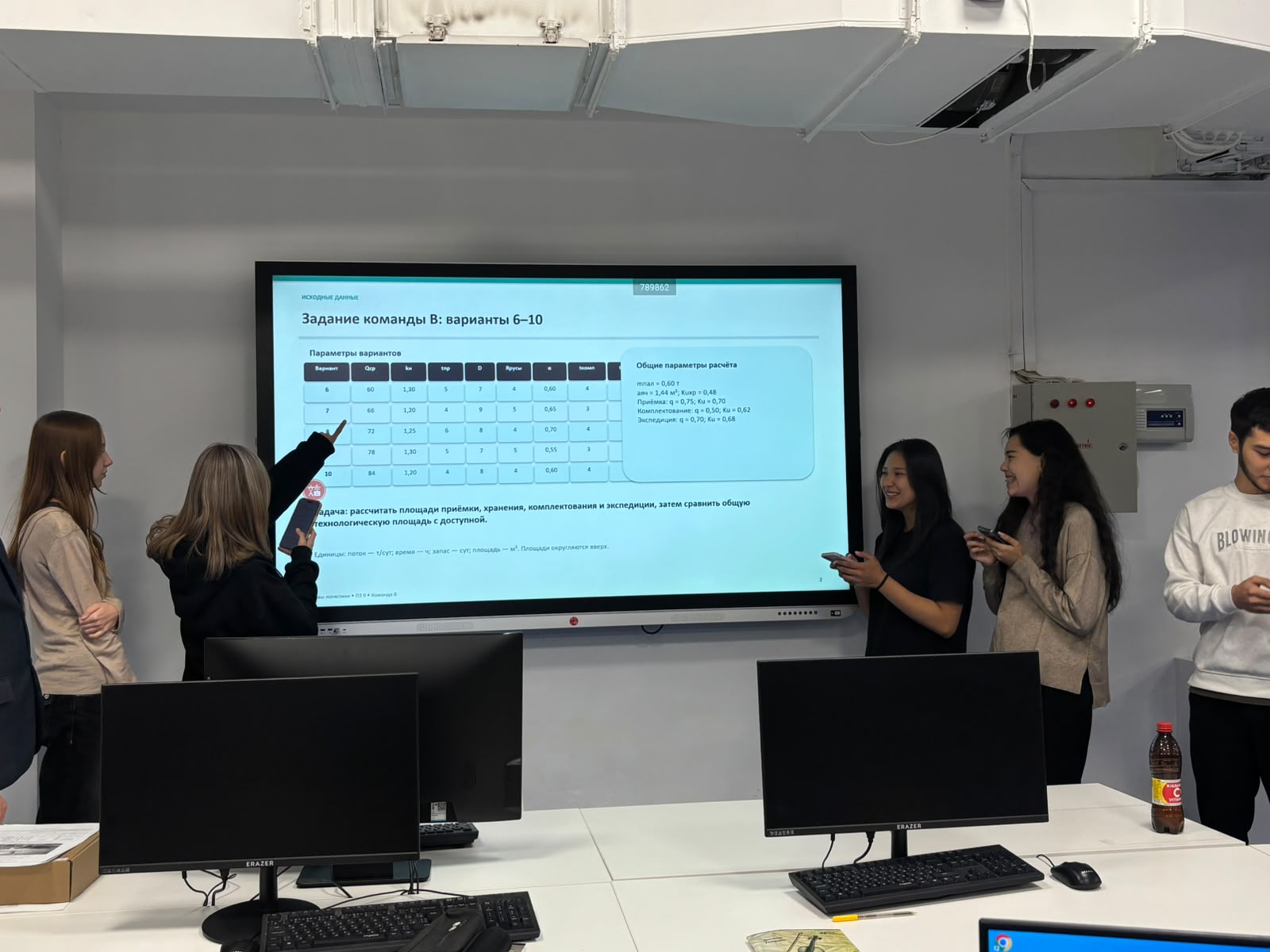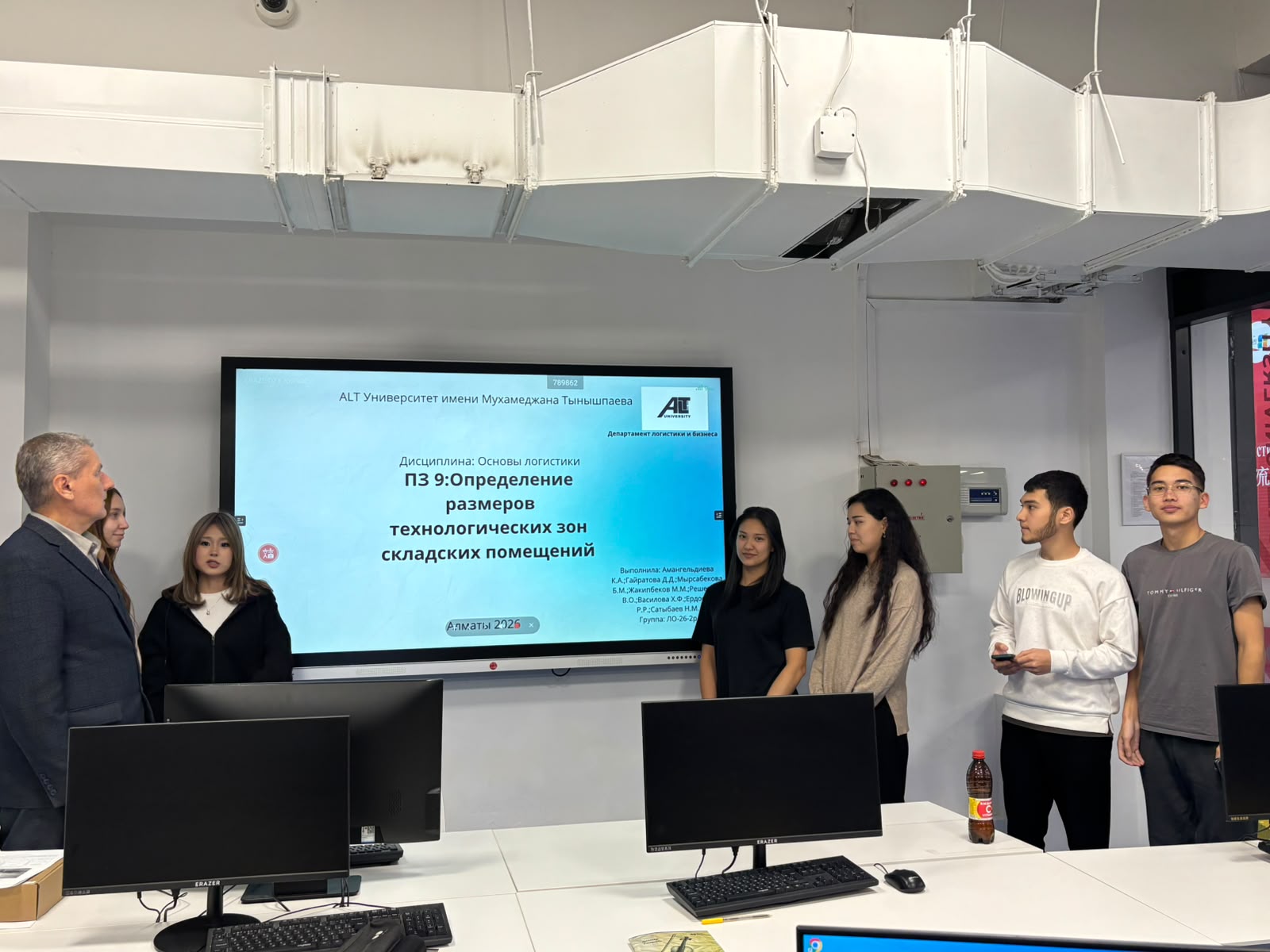
On October 27, 2026, ALT University held a master class on “Determining the Dimensions of Functional Zones in Warehouse Facilities” as part of the Basics of Logistics course.
The master class was conducted by N.E. Baranov for students of groups LO-26 and US-LO-26-2 in classroom R001.
The session was organized in an interactive game-based format called “Warehouse Brainstorm”, designed to develop practical skills in warehouse space calculations, logistics process optimization, and managerial decision-making.
Warehouse Brainstorm: Learning Through Team Competition
The distinctive feature of the master class was its combination of engineering and economic calculations, teamwork, and elements of professional competition.
According to the session methodology, students were divided into three teams, each assigned five practical cases involving different cargo flow parameters and warehouse infrastructure conditions.
Participants assumed the roles of coordinators, analysts, calculation controllers, and presenters, allowing team members to contribute to solving a common logistics challenge.
The practical activities covered four main functional zones of a warehouse:
-
Receiving area — calculating the space required for unloading, inspection, and processing incoming goods.
-
Storage area — determining pallet space requirements and storage capacity based on inventory levels and vertical storage arrangements.
-
Order picking area — calculating the space needed for selecting, consolidating, and preparing customer orders.
-
Dispatch area — determining the space required for shipment consolidation and loading preparation.
From Calculations to Managerial Decisions
The main objective was not only to determine the warehouse space required but also to evaluate how efficiently that space could be utilized.
Using the provided data, students were tasked with calculating average daily and peak cargo flows, determining warehouse space requirements, and comparing the results with available resources.
Where a space shortage was identified, participants were expected to develop and justify an appropriate warehouse optimization solution.
The approaches considered included increasing vertical storage levels, reducing cargo dwell time in functional zones, balancing delivery schedules, improving inventory management, and applying cross-docking technology.
Particular attention was given to warehouse infrastructure limitations and the need to comply with safety requirements.
Team Presentations and Exchange of Ideas
The game-based format involved not only completing calculations but also presenting and defending the proposed solutions.
Teams were expected to present a material flow diagram illustrating the sequence “receiving → storage → order picking → dispatch”, along with calculation results and managerial conclusions.
An additional feature was an “Ideas Exchange”, which allowed teams to consult one another and discuss possible solutions.
This approach was designed to strengthen analytical thinking, professional communication, teamwork, and the ability to justify decisions under resource constraints.
Practical Value for Future Logistics Professionals
Efficient warehouse space utilization directly affects logistics productivity, operating costs, and the quality of customer service.
Learning how to calculate and optimize functional warehouse zones helps future specialists understand the relationships between cargo flows, inventory levels, technical capabilities, and the organization of logistics infrastructure.
The master class demonstrates the value of practice-oriented education, enabling students to move beyond applying calculation formulas toward analyzing real-world operational scenarios and selecting appropriate managerial solutions.
Contribution to the United Nations Sustainable Development Goals
- SDG 4 — Quality Education. Introducing interactive teaching methods and developing practical competencies, analytical thinking, and teamwork skills.
- SDG 8 — Decent Work and Economic Growth. Building professional skills in improving productivity, using resources efficiently, and reducing logistics operating costs.
- SDG 9 — Industry, Innovation and Infrastructure. Developing competencies in warehouse infrastructure planning and optimization, applying modern logistics technologies, and improving the efficiency of warehouse systems.
Such master classes contribute to preparing competitive professionals capable of addressing practical challenges in the modern transport and logistics industry.
Author: Alik Asel