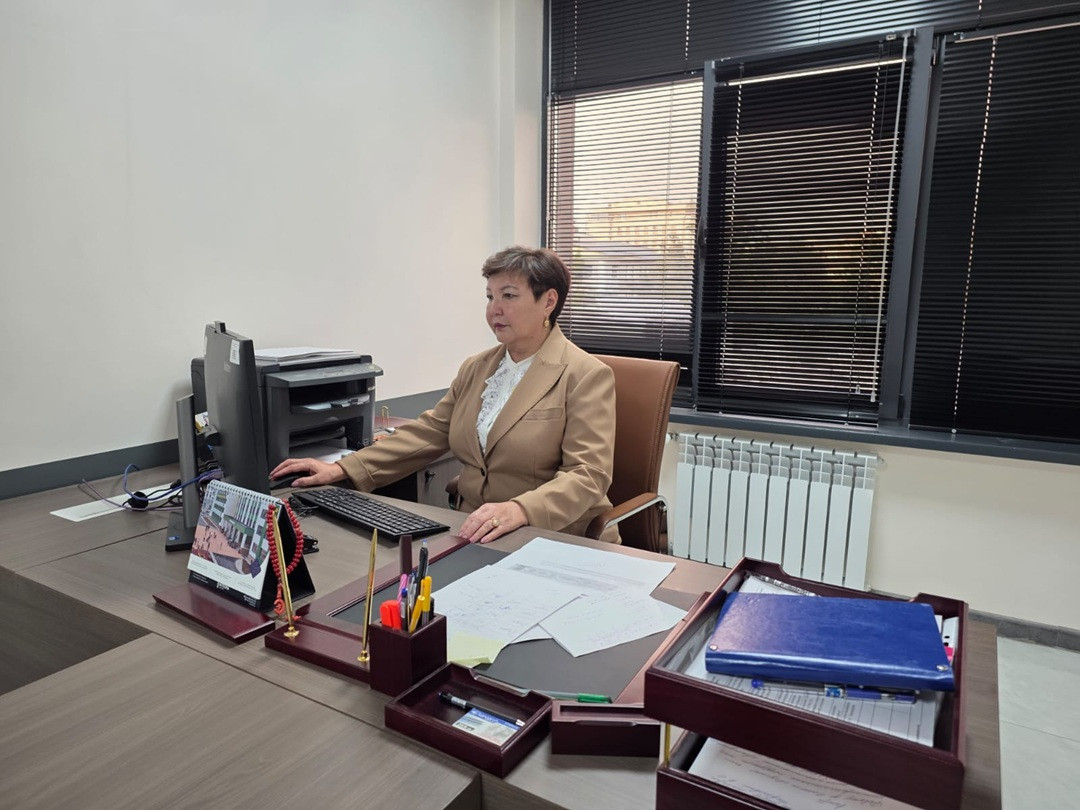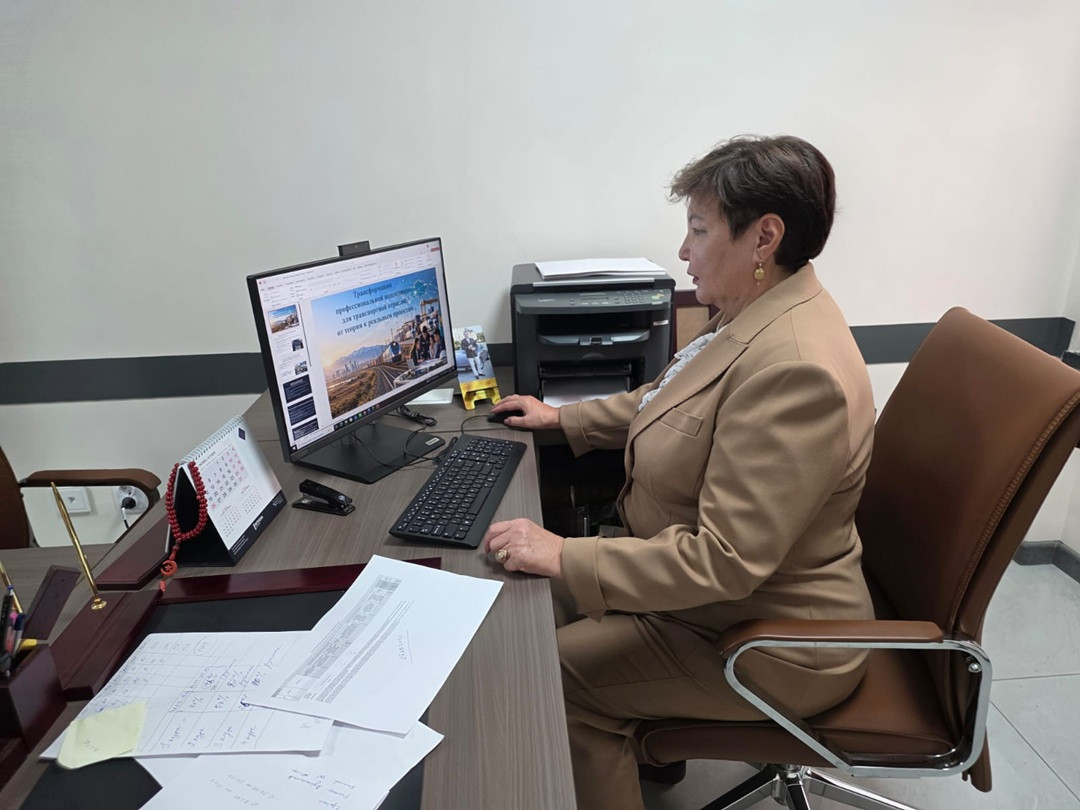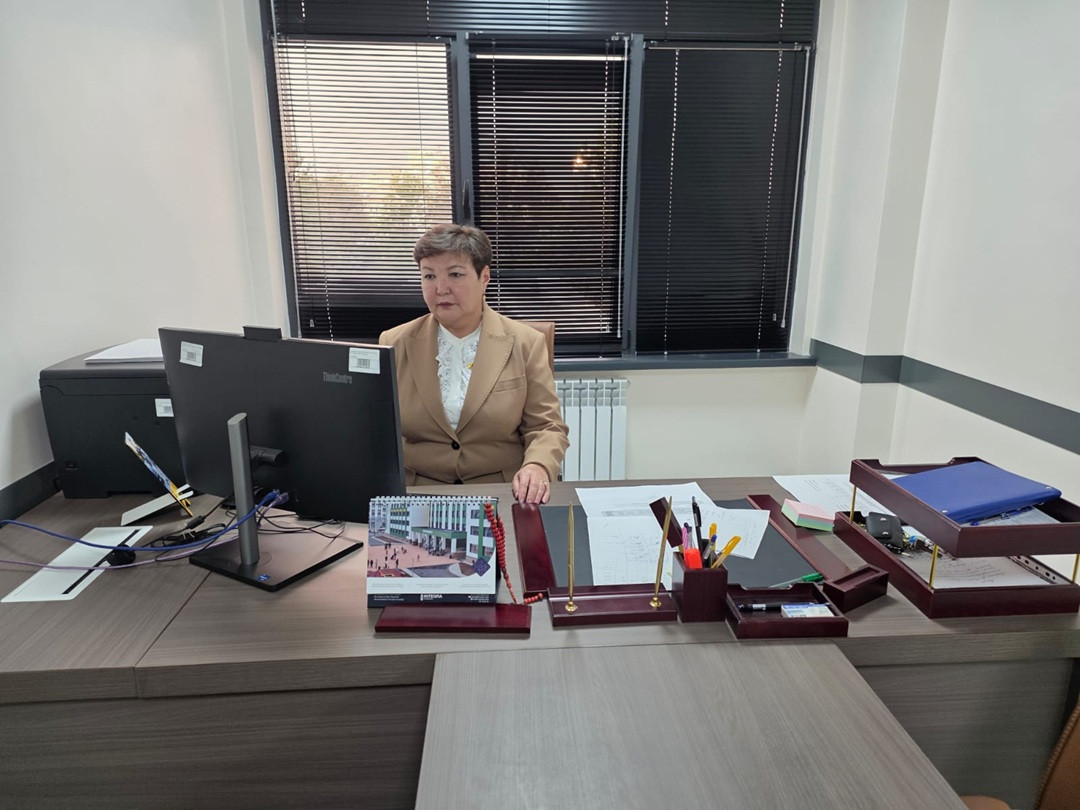
On October 1, 2026, a meeting of the Council for Education and Science under the Transport Coordination Council of the Commonwealth of Independent States (CIS) was held. The main venue for the meeting was the Russian University of Transport (RUT (MIIT)) in Moscow.
Bekzhanova Saule Yertayevna, Professor, Doctor of Technical Sciences at the Department of Logistics and Transport of ALT University named after Mukhametzhan Tynyshpayev, participated in the meeting online.
Professor Bekzhanova delivered a presentation entitled “From an Educational Programme to a Real Project: How Transport Universities Prepare Professionals for New Industry Challenges.” The session focused on integrating real industry challenges into the educational process, developing project-based learning, involving employers in professional training, strengthening practical training and internships, and identifying initiatives that could be jointly implemented by transport universities across the CIS member states.
In her presentation, Professor Bekzhanova outlined ALT University’s approach to transforming professional training for the transport sector in the context of digitalization, automation, and the increasing complexity of transport and logistics systems. She emphasized that a modern transport university should go beyond the transfer of theoretical knowledge and prepare specialists who are capable of addressing real industry challenges, making well-founded decisions, using modern digital tools, and contributing to infrastructure, logistics, and technological projects.
Particular attention was paid to the integration of real production and industry challenges directly into the educational process. This approach involves moving beyond traditional academic assignments towards working with real data, analysing transport systems, modelling different scenarios, and developing specific engineering and organizational solutions.
Another important focus of the presentation was strengthening cooperation between universities, students, and employers. Project-based learning was presented as an integral component of educational programmes, while transport companies can become direct participants in professional training — from contributing to curriculum development and practical classes to providing real production challenges for student projects.
A separate part of the presentation focused on cooperation among transport universities of the CIS member states. Promising areas included joint student project teams, network-based educational modules, academic mobility and short-term internships, virtual laboratories, joint hackathons and case competitions, as well as joint supervision of Master’s and doctoral research.
ALT University also proposed several practical initiatives for further cooperation, including the establishment of a Bank of Real Industry Challenges for CIS Transport Universities, an International Transport Project School, and a Network Laboratory for Digital Transport Systems, along with the development of joint educational modules and reciprocal internship and practical training programmes.
A key idea of the presentation was the transition from an educational programme to a comprehensive professional training ecosystem bringing together universities, students, industry, research laboratories, digital learning environments, professional communities, and partner universities. The outcomes of such training should extend beyond academic knowledge to include real projects, digital models, engineering solutions, and professional competencies that are directly relevant to the modern transport industry.
The participation of Professor Bekzhanova Saule Yertayevna in the meeting of the Council for Education and Science under the CIS Transport Coordination Council contributes to presenting ALT University’s experience on an international professional platform, strengthening cooperation among transport universities, and exchanging modern approaches to training the next generation of transport professionals.
SDG 4 — Quality Education
The initiative is also related to SDG 9 — Industry, Innovation and Infrastructure and SDG 17 — Partnerships for the Goals.
Author: Alik Asel