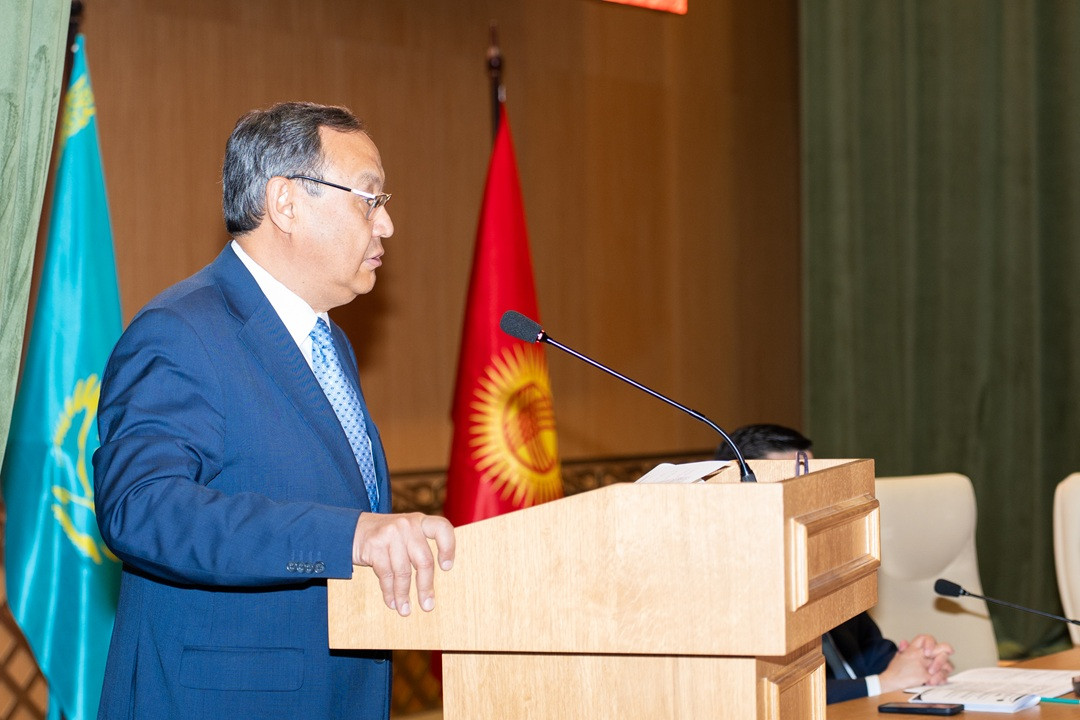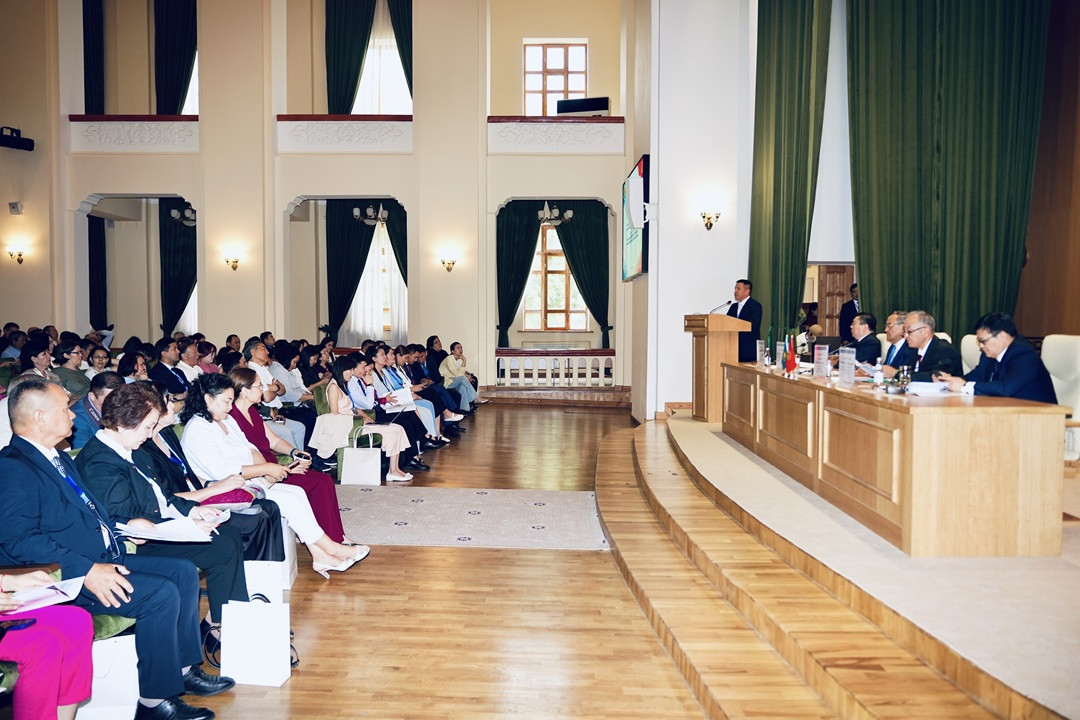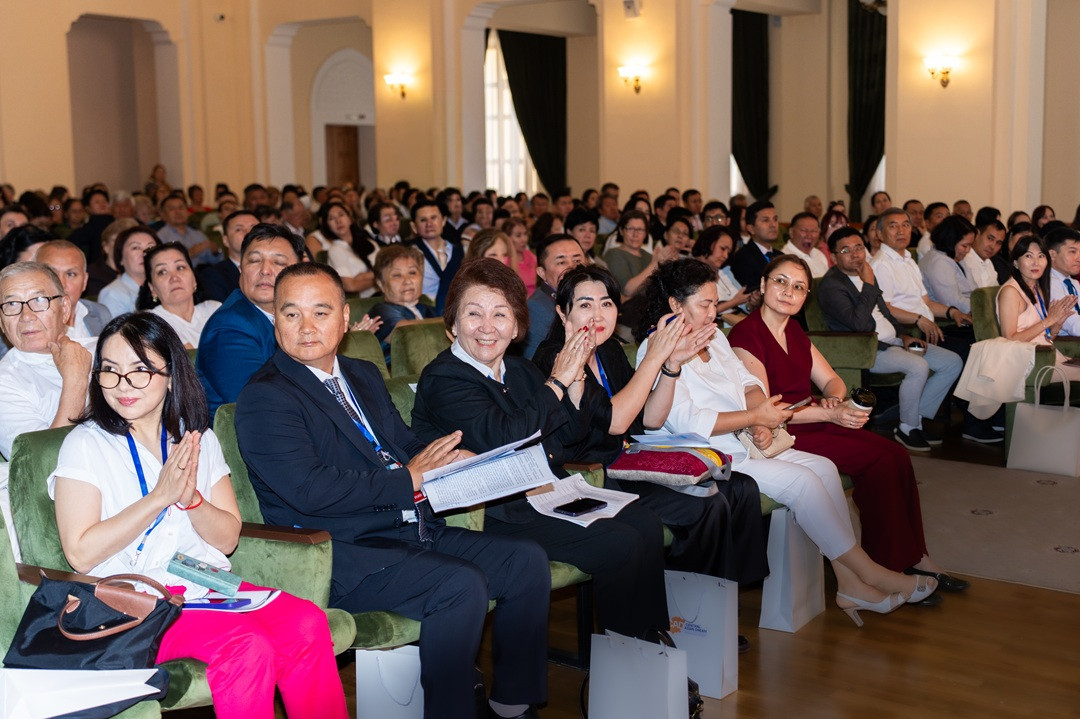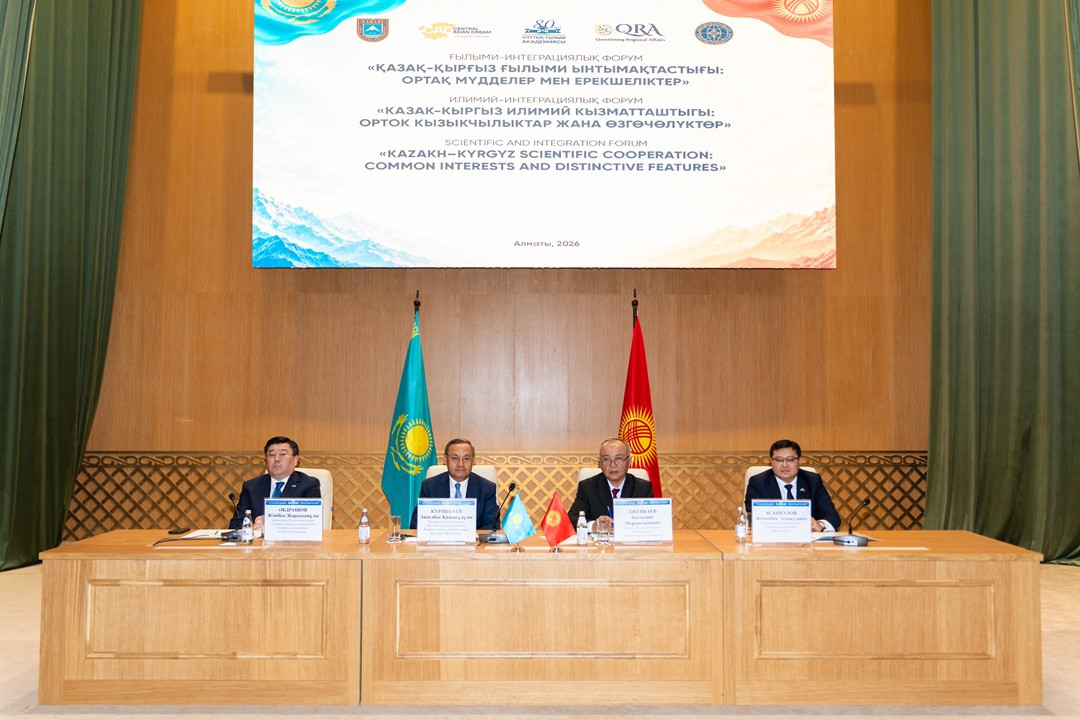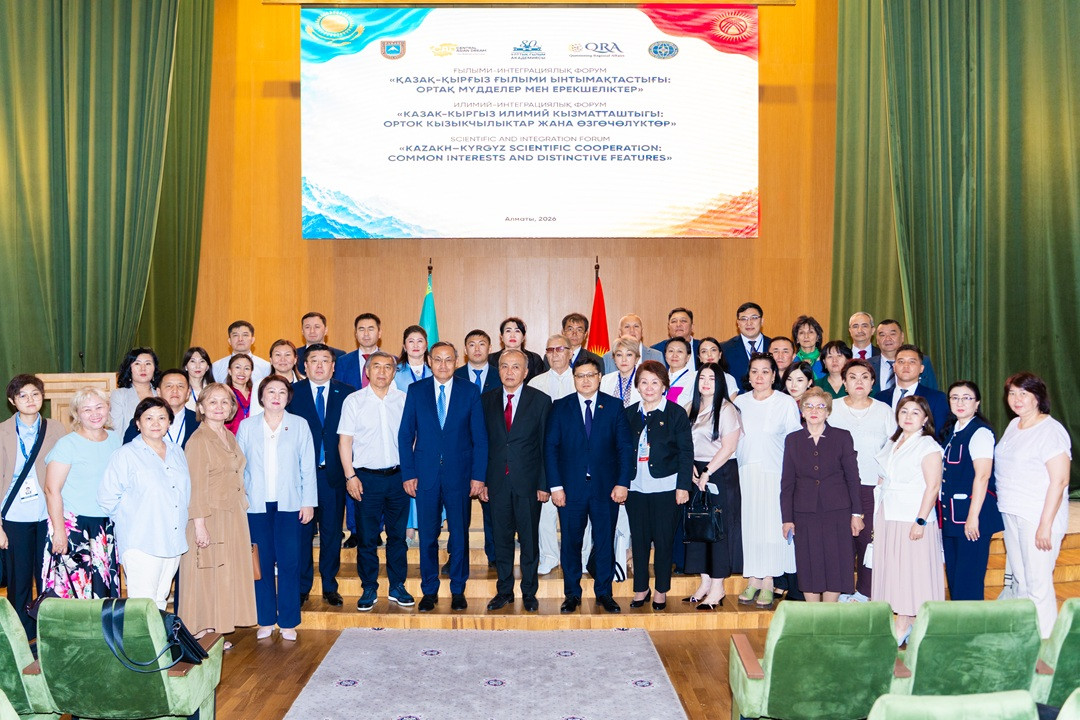
Almaty, June 19, 2026 — Representatives of ALT University participated in the scientific and integration forum “Kazakh-Kyrgyz Scientific Cooperation: Commonalities and Specifics,” organized by the National Academy of Sciences of the Republic of Kazakhstan under the President of the Republic of Kazakhstan.
The university delegation at the forum was led by Meruert Zharmagambetova, Chairman of the Board – Rector; Gani Sergazin, Vice-Rector for Science and International Cooperation; along with institute directors and members of the faculty.
The forum focused on advancing science diplomacy, reinforcing scientific synergy between Kazakhstan and Kyrgyzstan, and exploring the shared historical and cultural heritage of Central Asian nations. The event brought together government officials, heads of the national academies of sciences from both countries, academicians, leading scientists, experts, and public figures.
During the plenary and thematic sessions, the participants addressed pressing regional cooperation issues, the pivotal role of science in facing modern global challenges, and the prospects of co-studying the historical legacy of Central Asian peoples. The discussions also spanned a wide range of topics, including higher education development, water and energy cooperation, labor migration, transit strategies of regional states, and international partnership expansion.
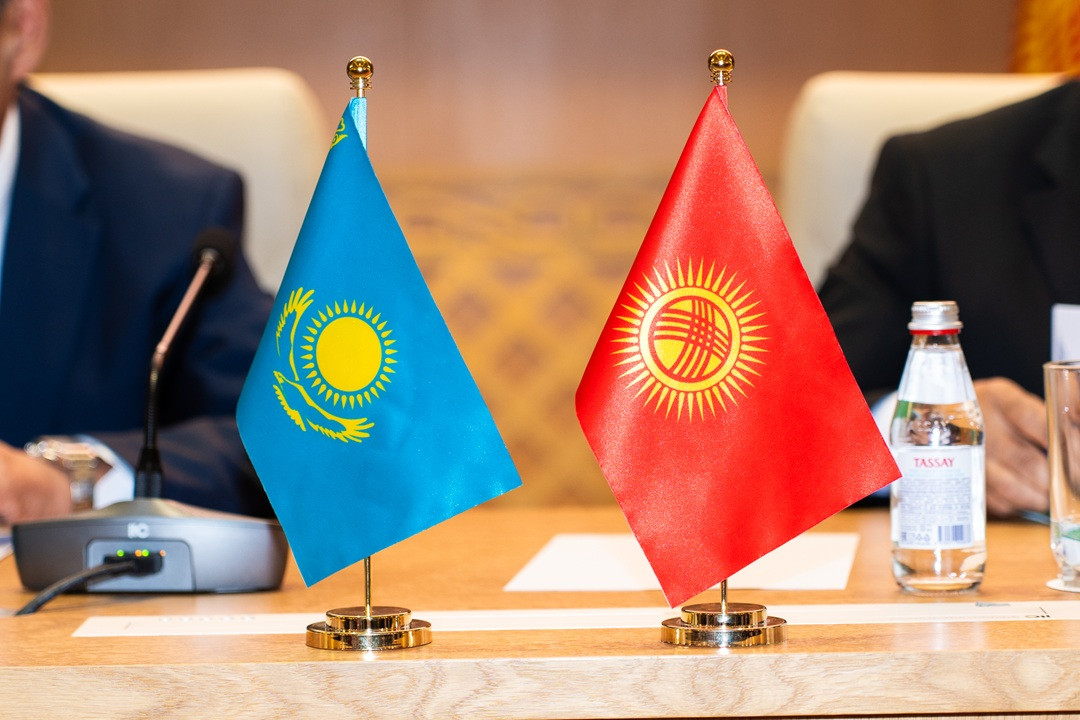
The cornerstone outcome of the forum was the signing of an Agreement on the Establishment of the International Consortium for the Study of Steppe Civilization. The historic document was signed between the National Academy of Sciences of the Republic of Kazakhstan under the President of the RK and the National Academy of Sciences of the Kyrgyz Republic under the President of the KR. This new scientific platform is designed to pool the research capacities of both nations for the comprehensive study of the Turkic peoples’ historical heritage, execution of joint scientific projects, organization of archaeological expeditions, creation of digital archives, and advancement of academic mobility for young scientists.
Special emphasis was placed on science diplomacy as a highly effective tool for building interstate trust, expanding humanitarian ties, and shaping a unified intellectual space in Central Asia. According to the participants, the launch of the International Consortium for the Study of Steppe Civilization marks a substantial leap forward in driving scientific integration, enhancing academic collaboration, and promoting the rich historical and cultural heritage of the Great Steppe on a global scale.
Author: Aliya Yerlan